Akard Station
DART, Dallas, Texas
32.7818° N, -96.8008° W
AI Vision: 003
Programs: Rhino, Grasshopper, Google AI Studio, NanoBanana Pro 2
Typology: Transit
Conceptualization
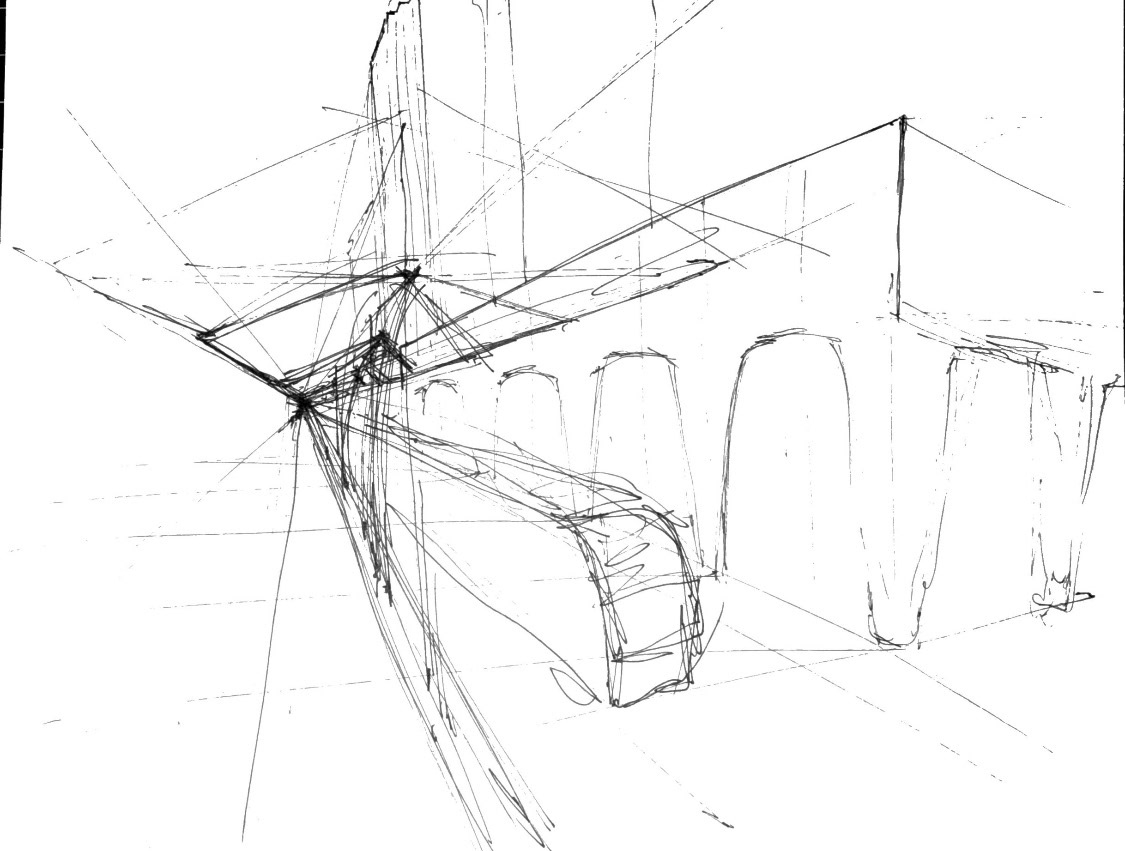
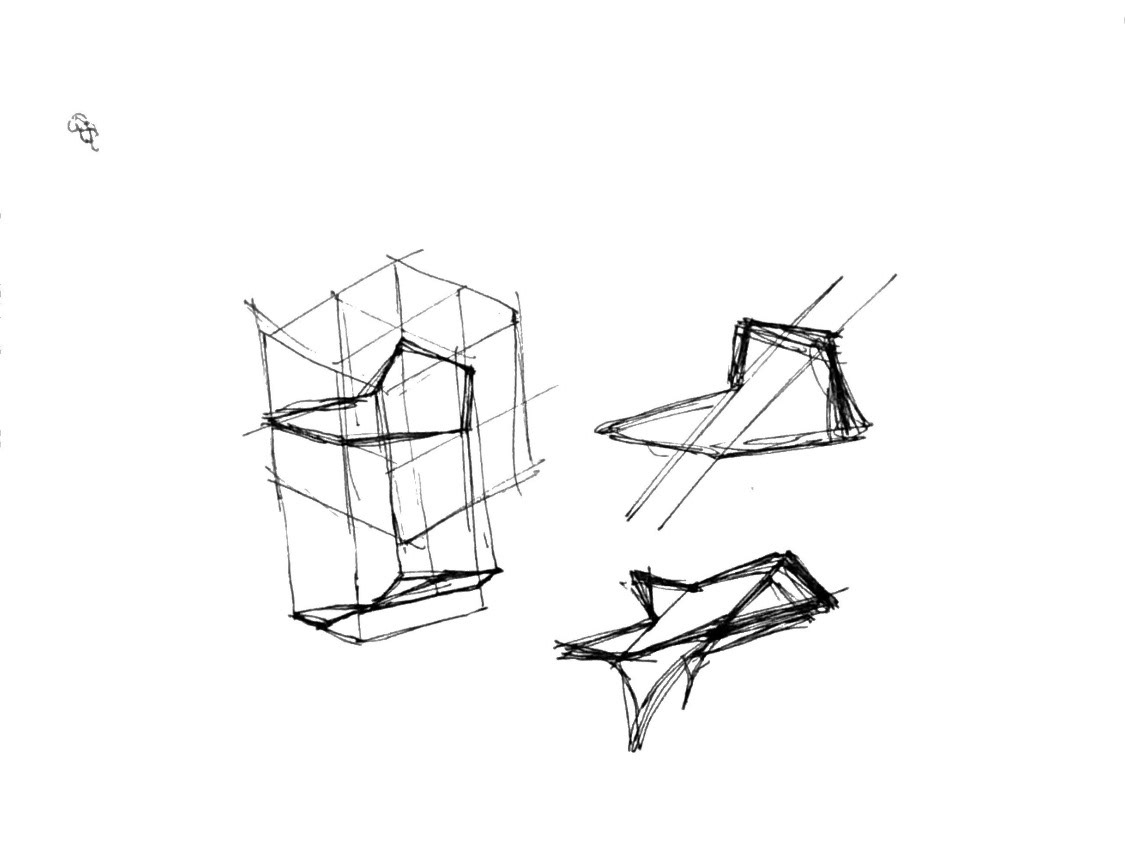
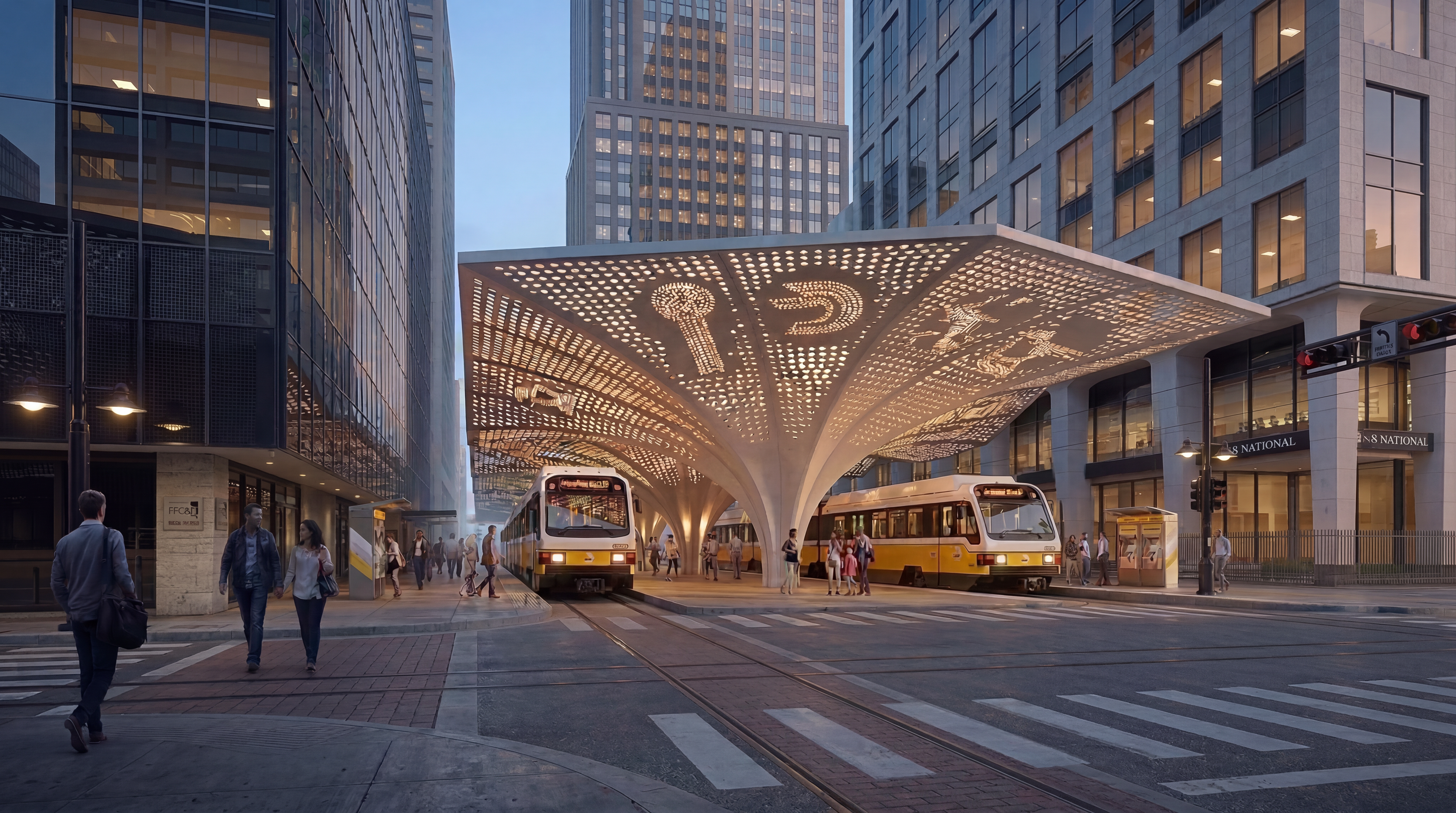
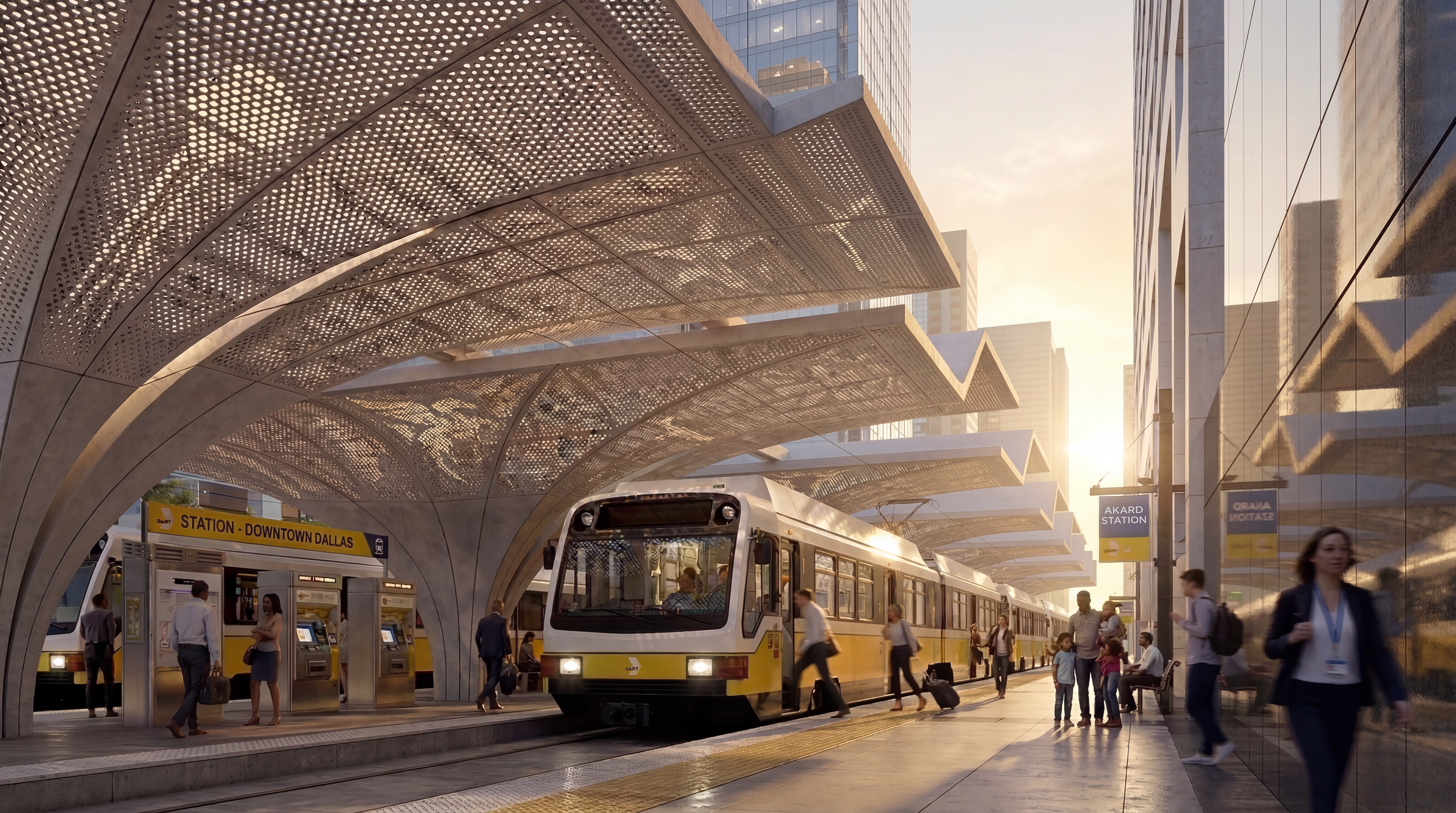
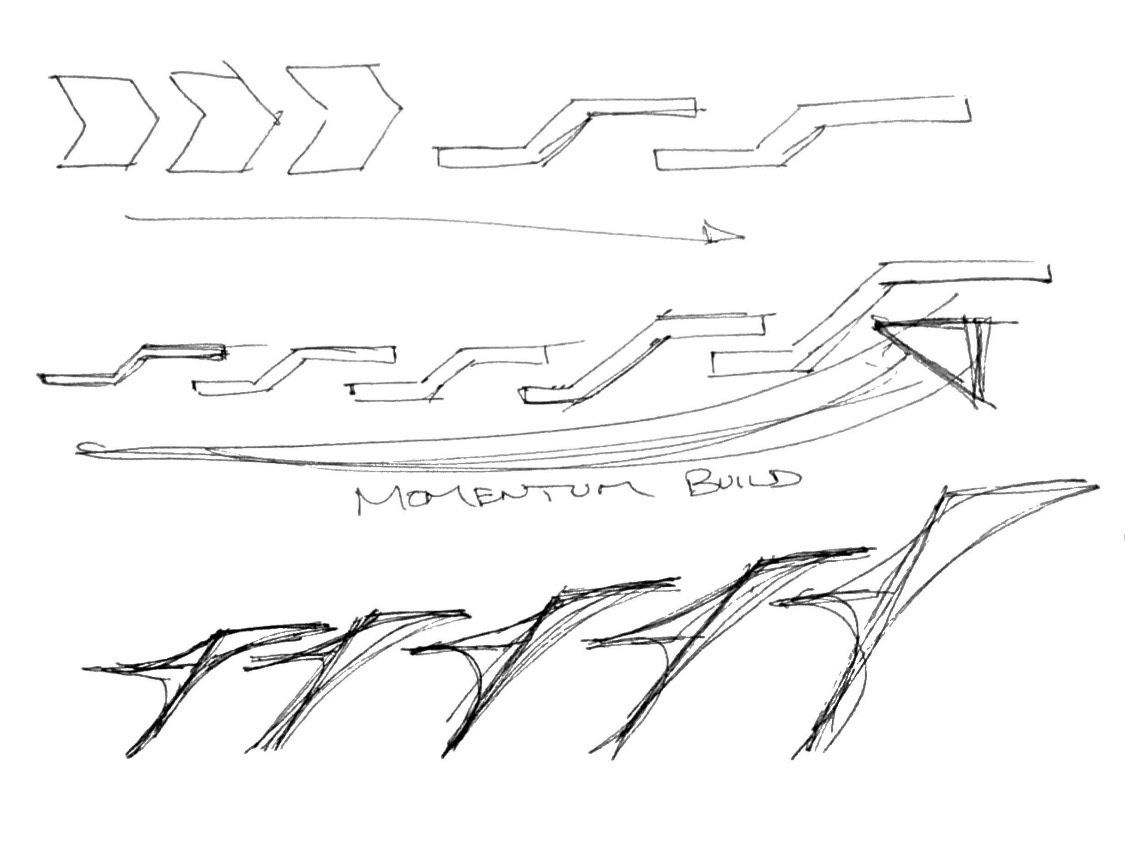
Located adjacent to the current DART Headquarters in downtown Dallas, the Akard Station canopy explores how transit architecture can embody motion rather than simply shelter it. The design originates from directional sketches studying the movement of trains through the corridor, translating that momentum into a sequence of folded structural modules that progress rhythmically along the platform. This repetition establishes a continuous canopy that guides passengers through the station while reinforcing the linear energy of the rail line within the dense downtown context.
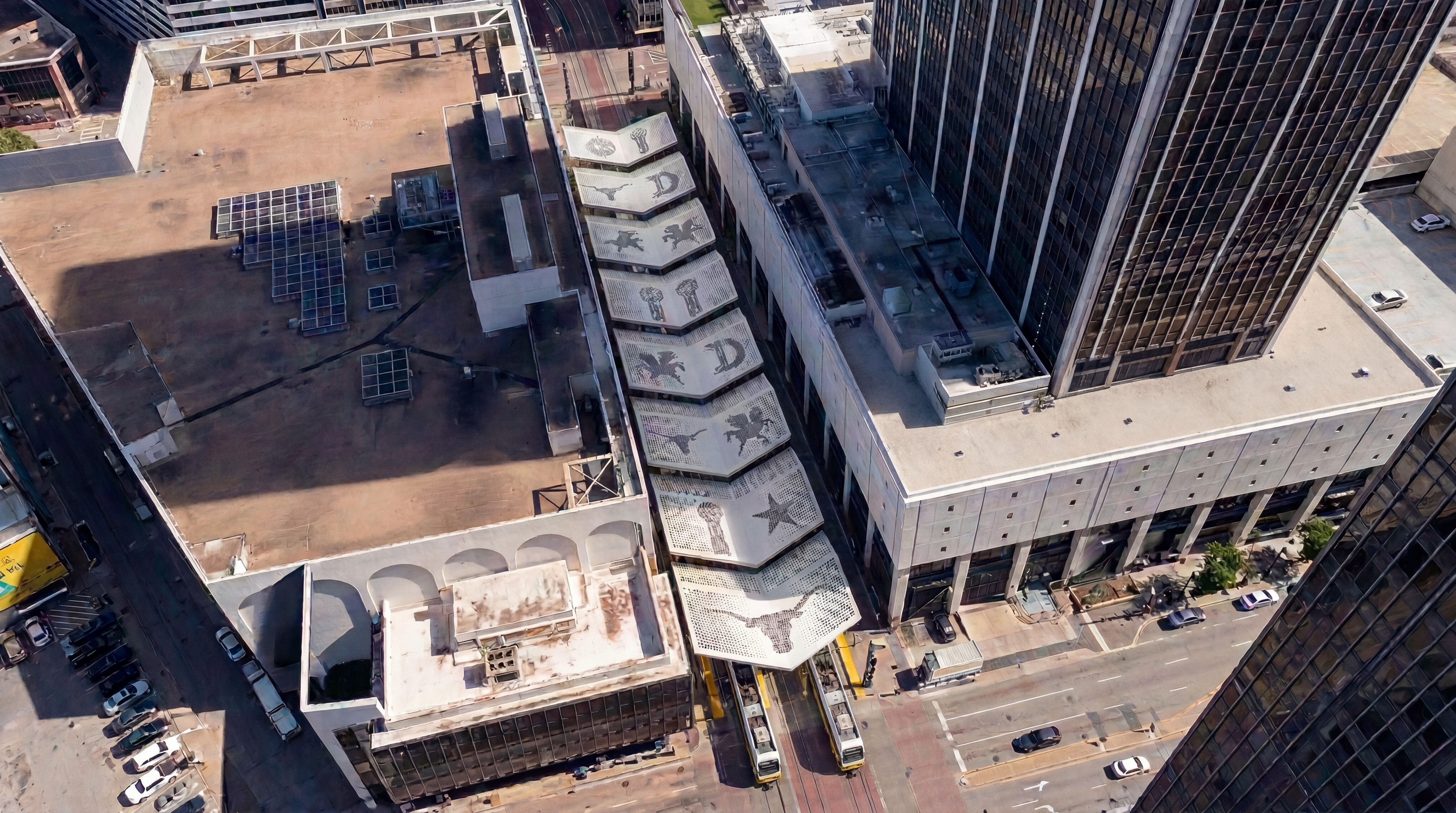
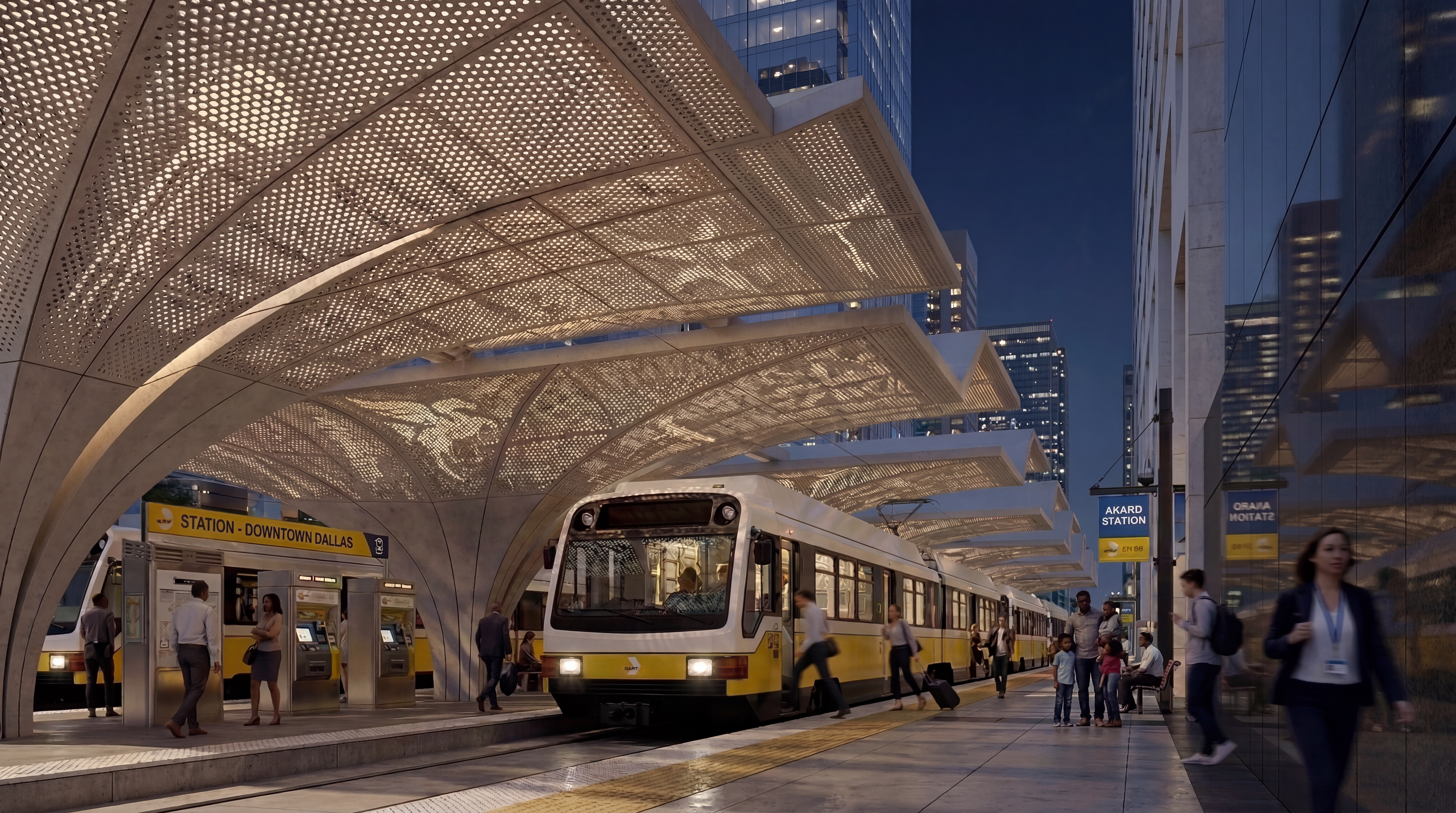
The canopy structure branches outward to support perforated metal panels that filter daylight and create shifting patterns of light and shadow across the platform. These perforations introduce visual depth and civic identity while maintaining openness and visibility throughout the station environment. Together, the structural rhythm and patterned surface transform the canopy into a dynamic architectural element that reflects the movement, energy, and connectivity of Dallas’ urban rail network.
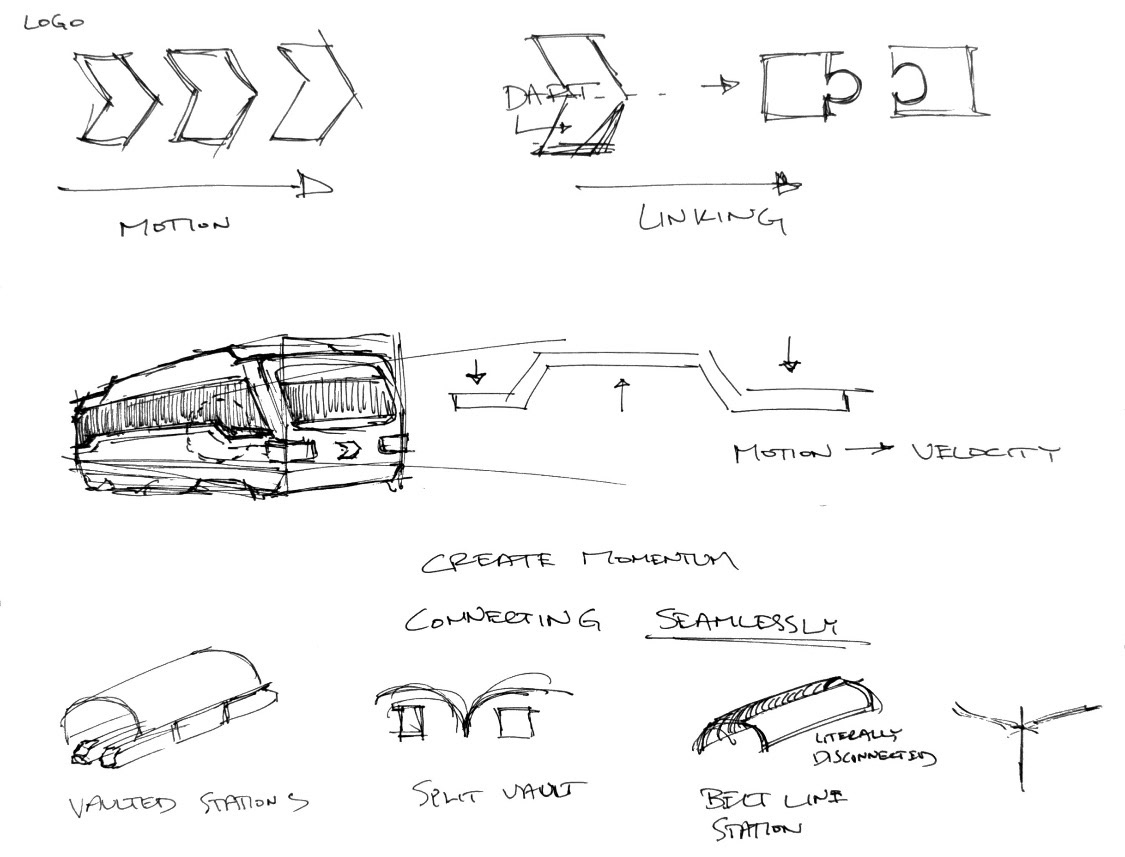
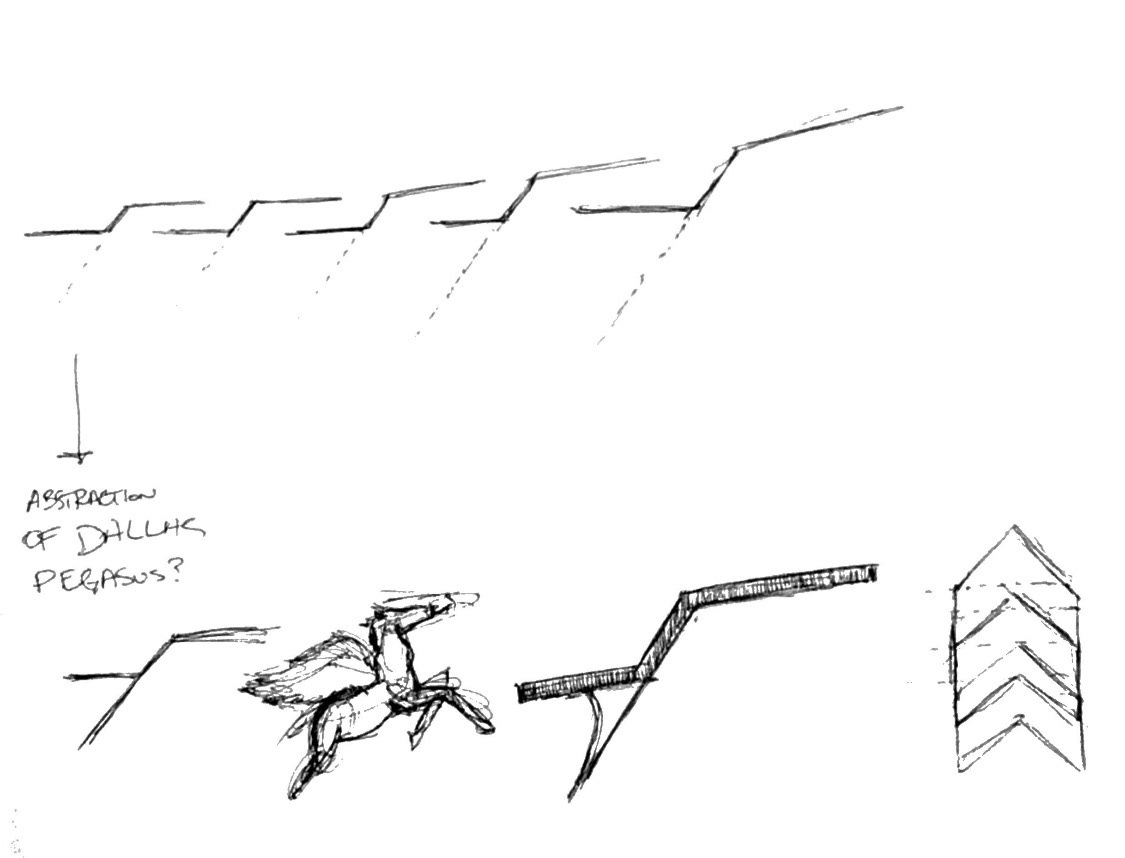
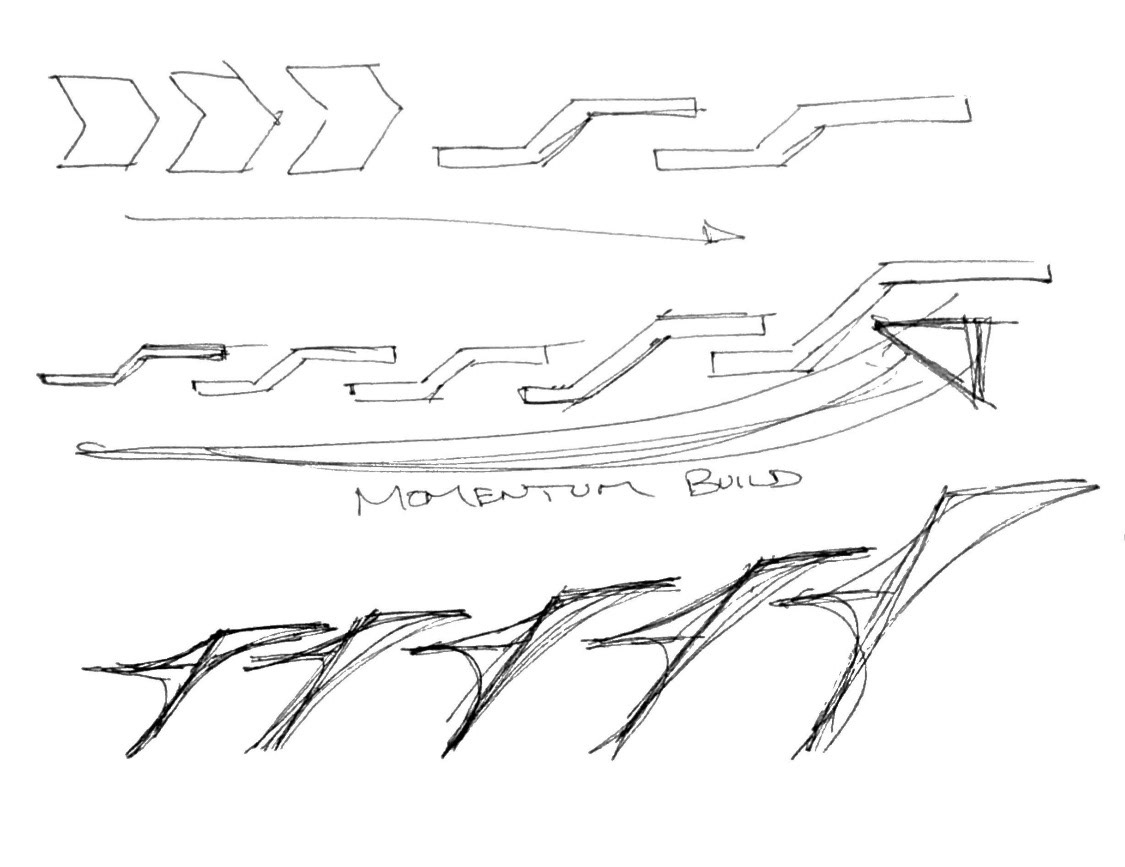
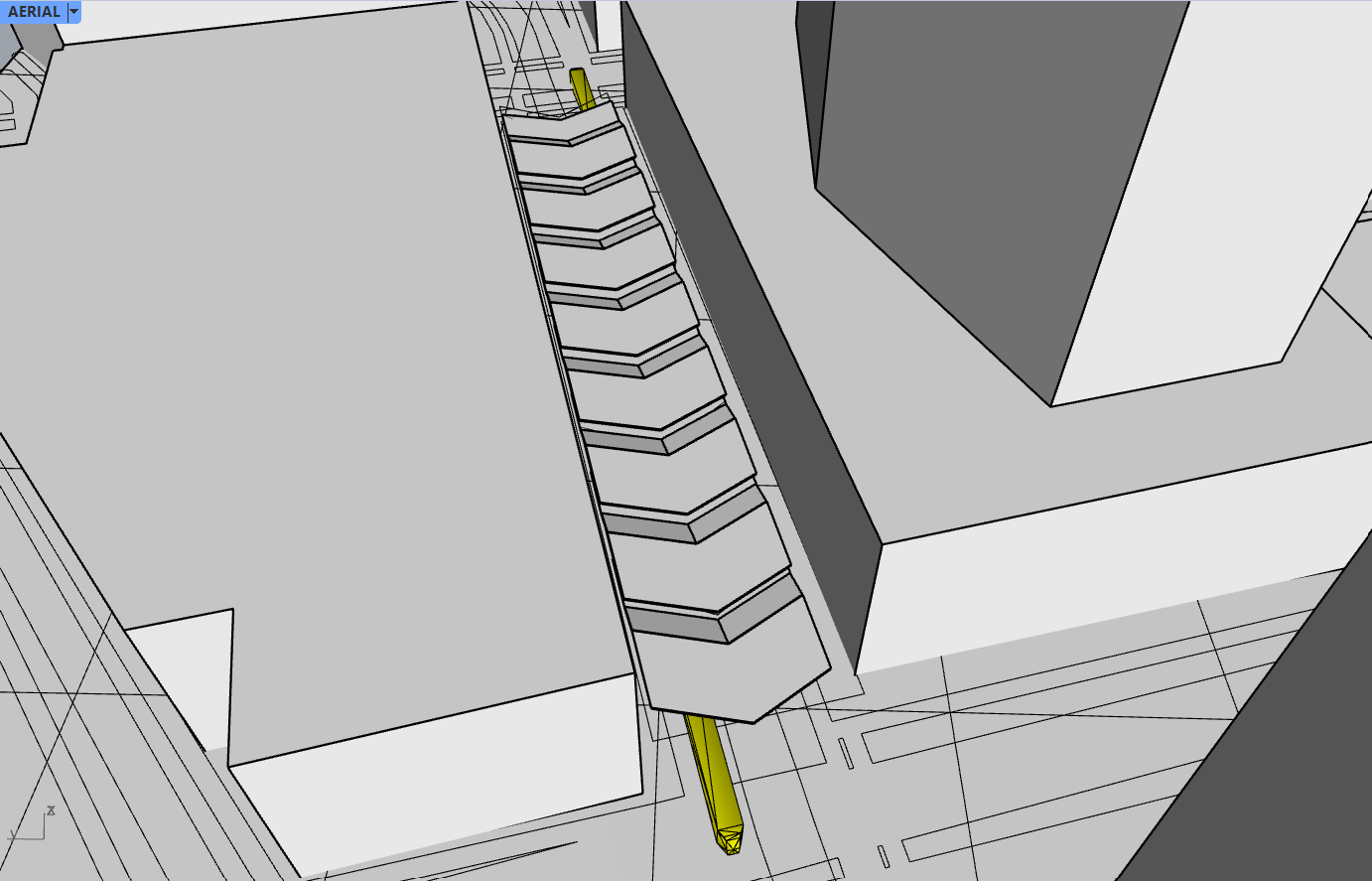
The design process began with a series of quick exploratory sketches focused on capturing motion, direction, and rhythm along the rail corridor. Rather than jumping directly into detailed modeling, the concept was translated into a rudimentary digital framework inside Rhino using simple, generic primitive geometry. This step allowed the core spatial ideas such as canopy rhythm, structural spacing, and overall proportion to be tested quickly while maintaining the flexibility typical of early-stage design.
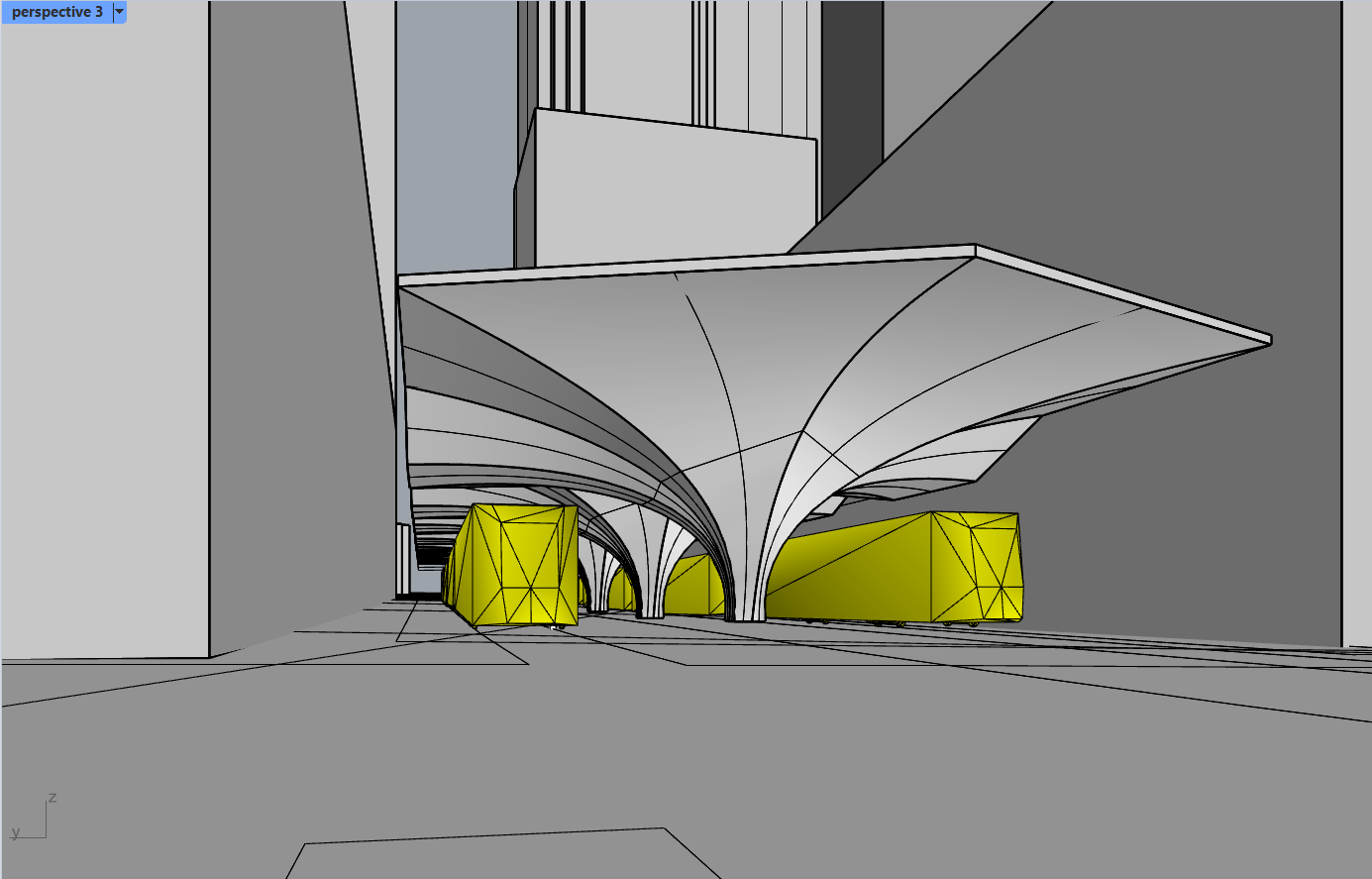
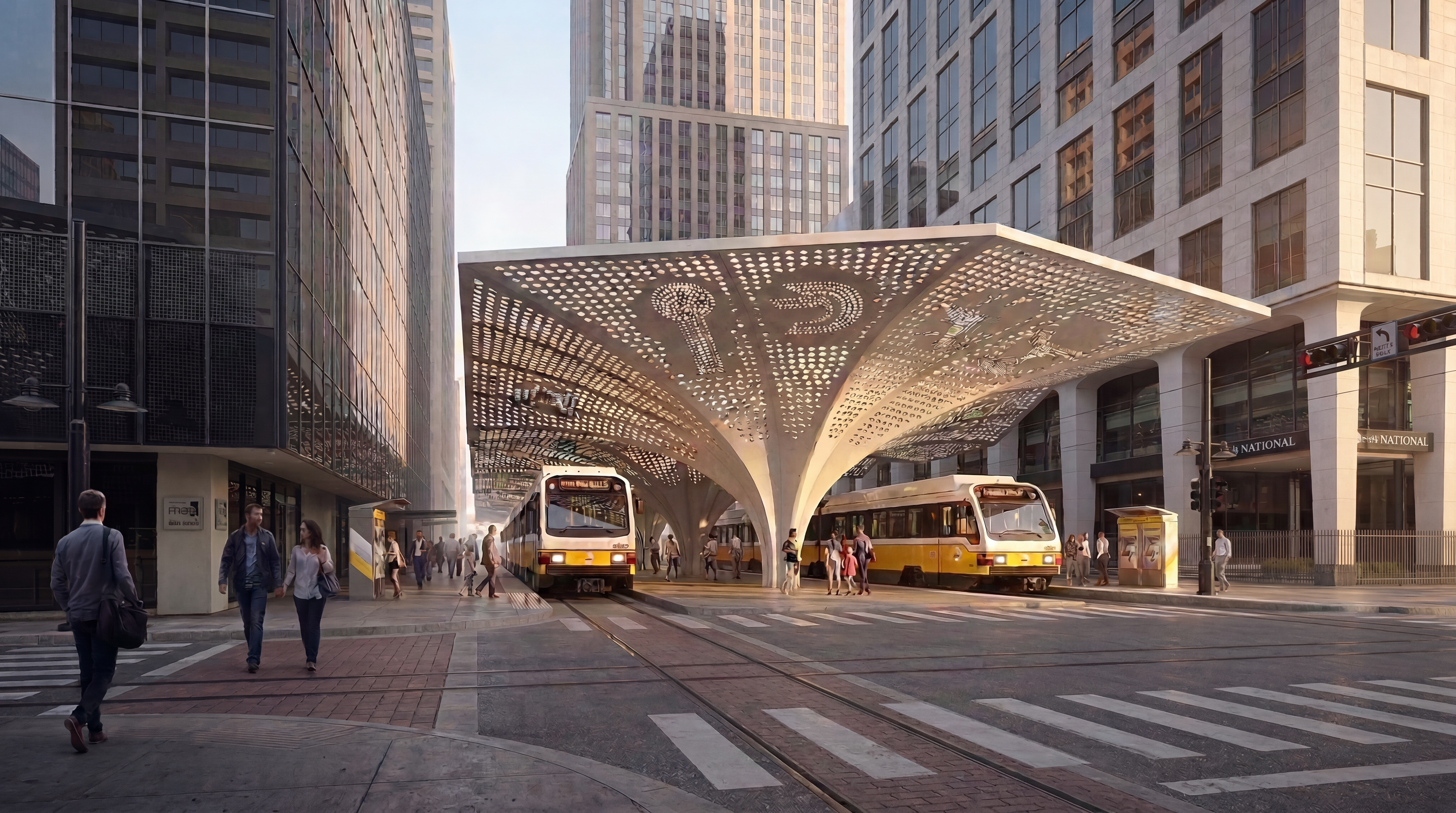
Once the foundational geometry was established, a custom integrated AI workflow was used to render the Rhino viewports directly within the modeling environment. This allowed the conceptual model to be visualized with a high level of architectural fidelity while preserving the original geometry and design intent. Instead of exporting models to external AI platforms or relying on third-party middleware, the process kept design, iteration, and visualization within the same workspace, allowing rapid feedback between sketch, model, and rendered architectural context.
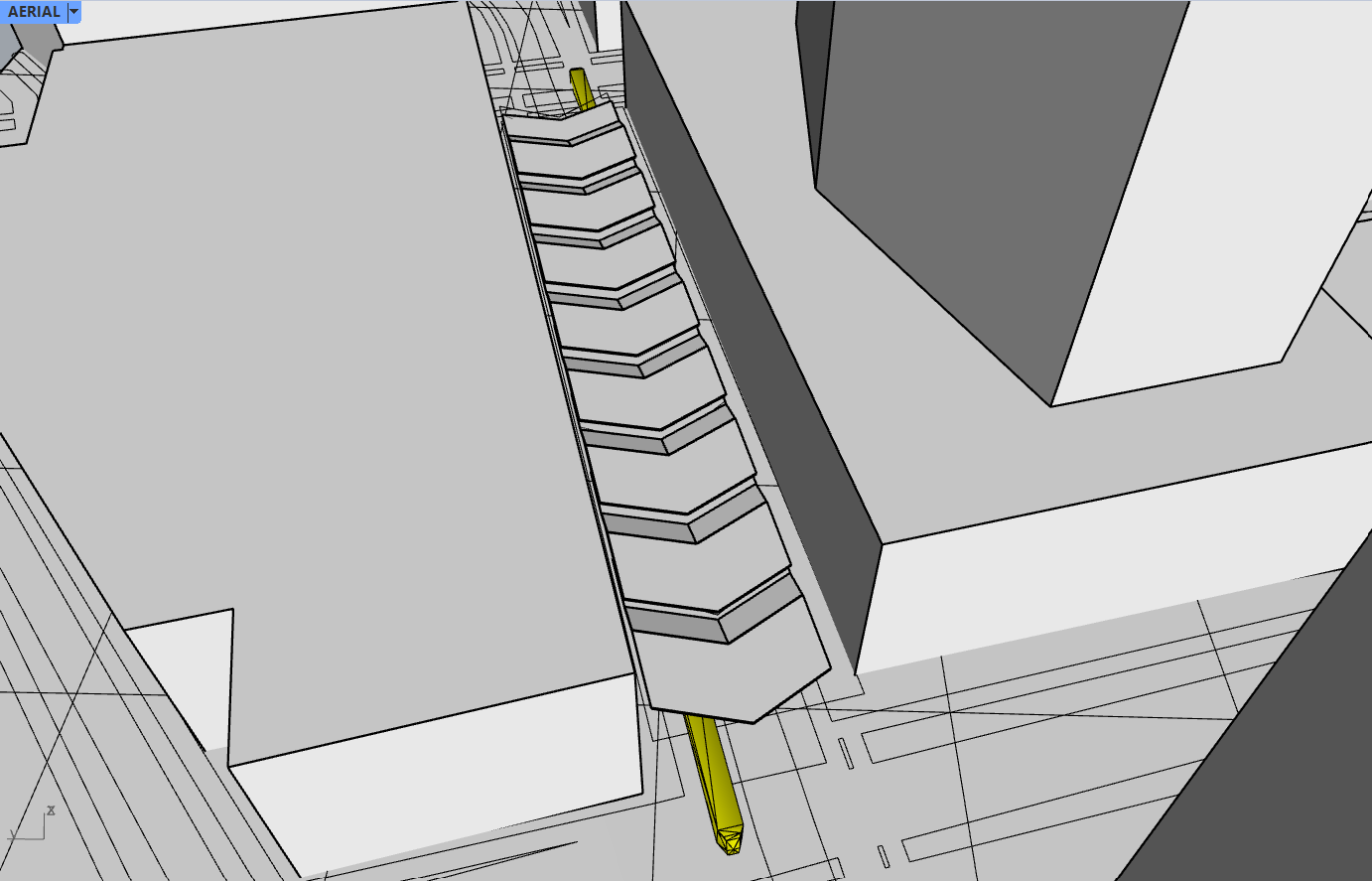
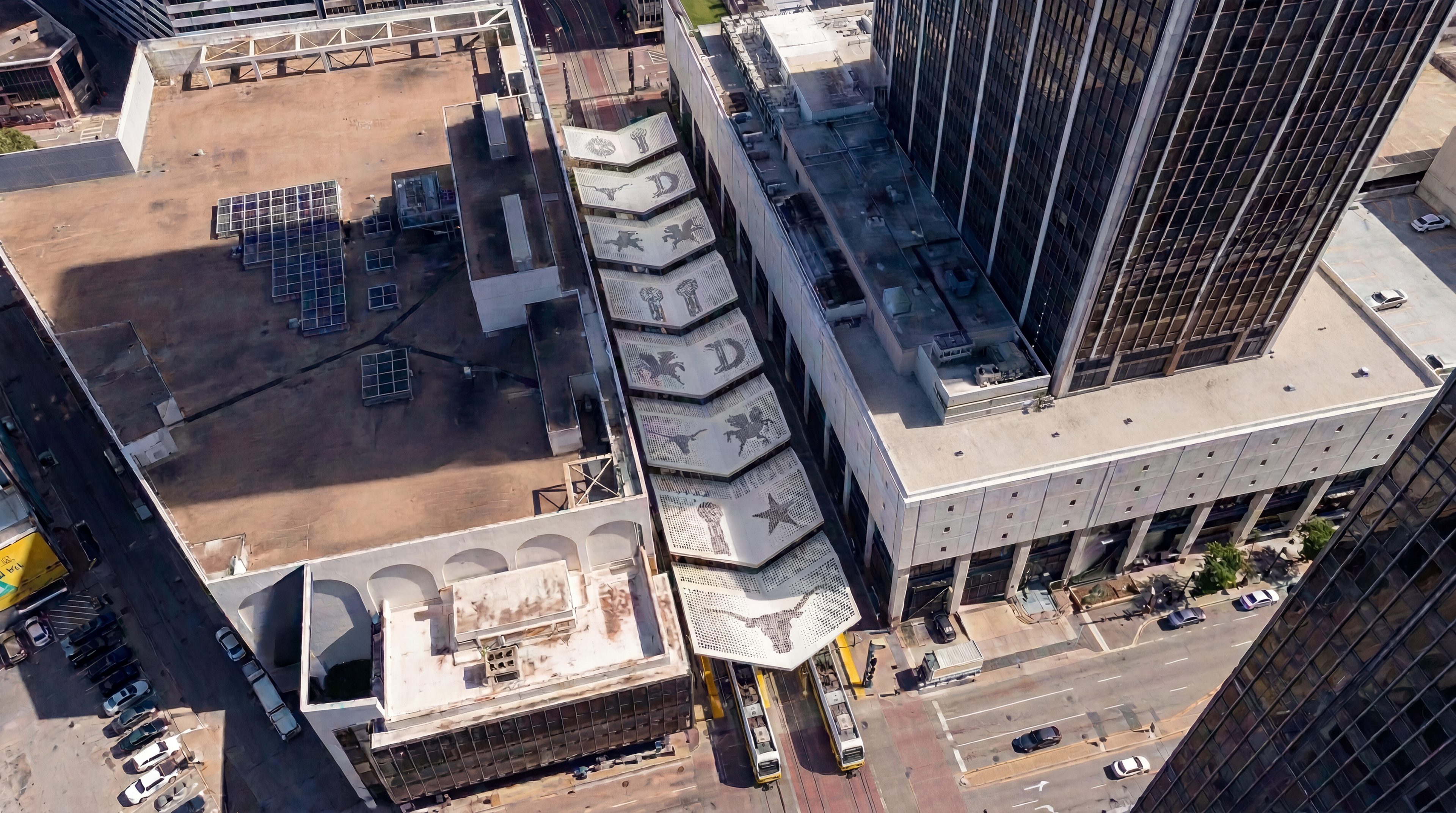
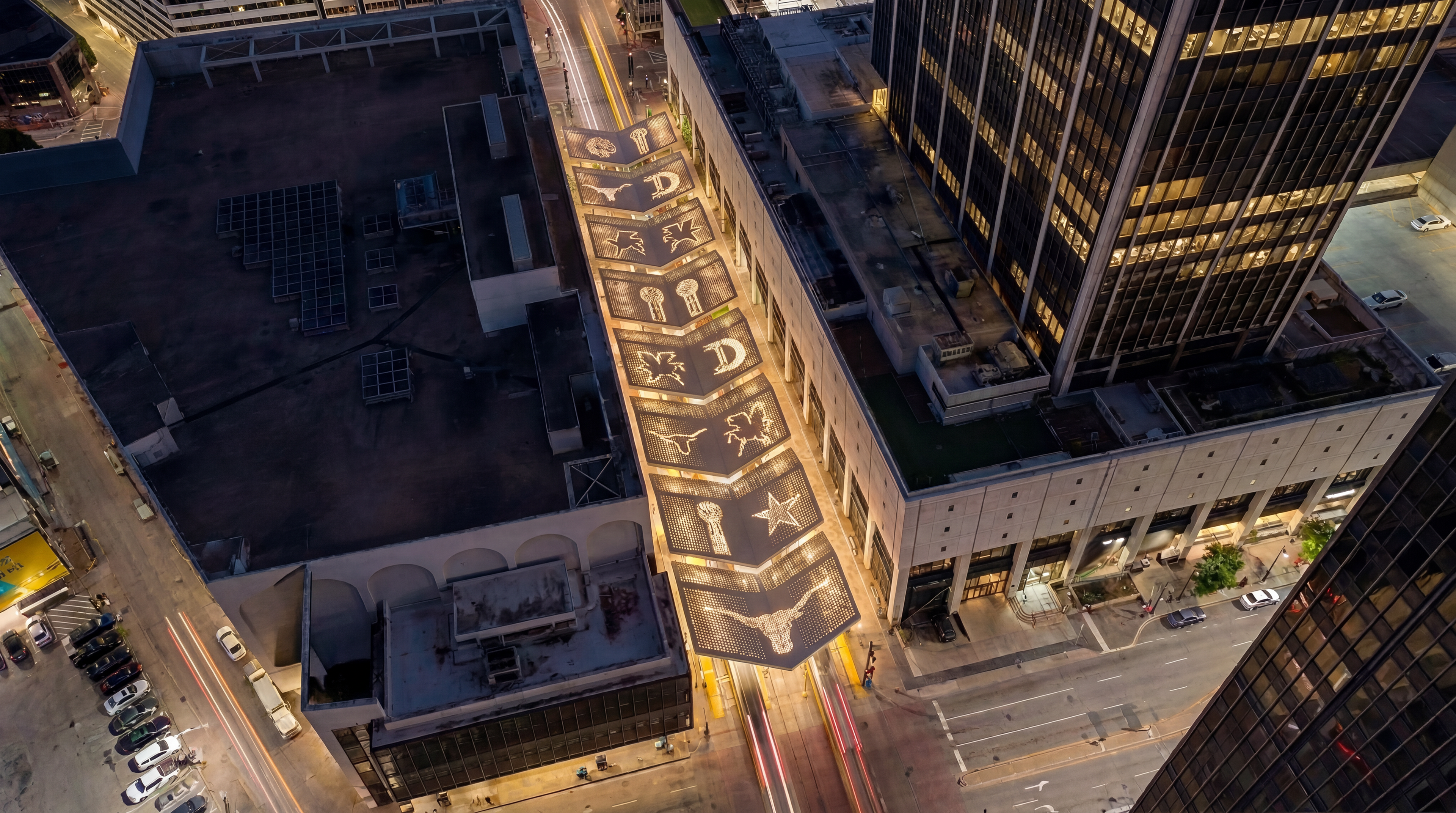
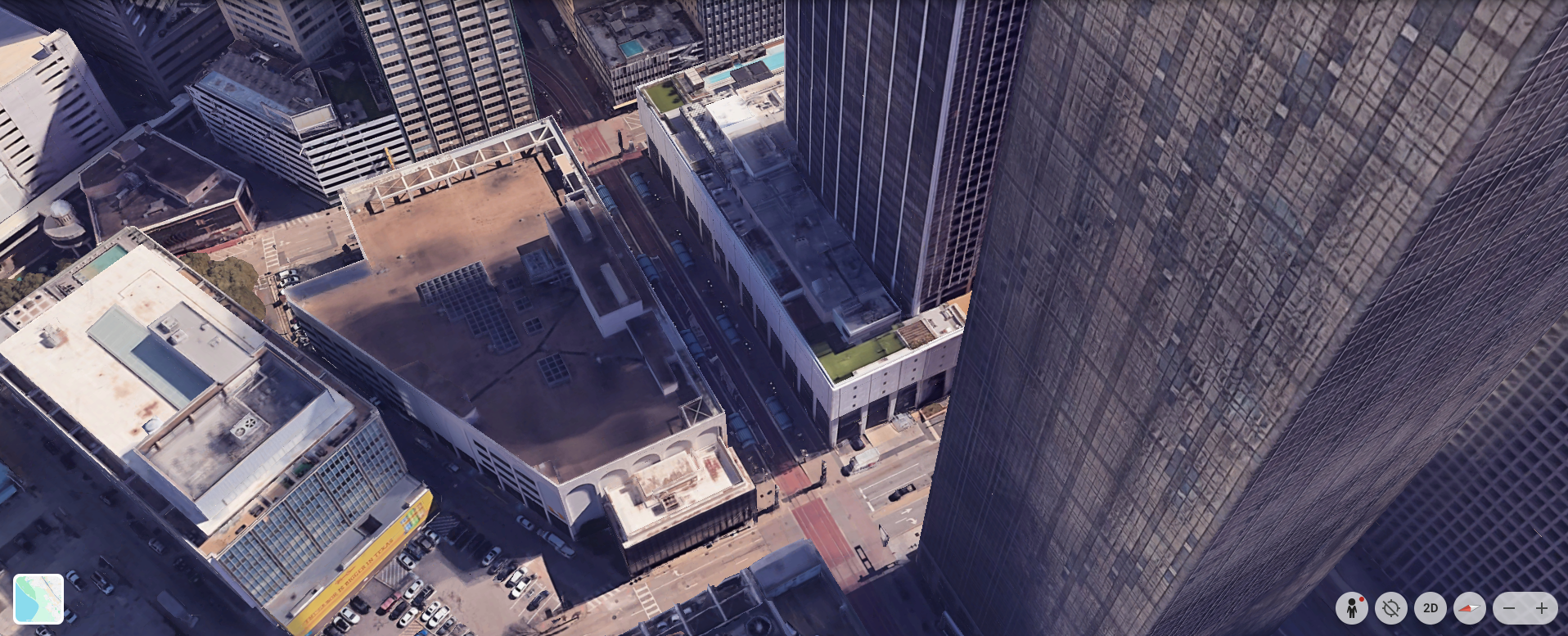
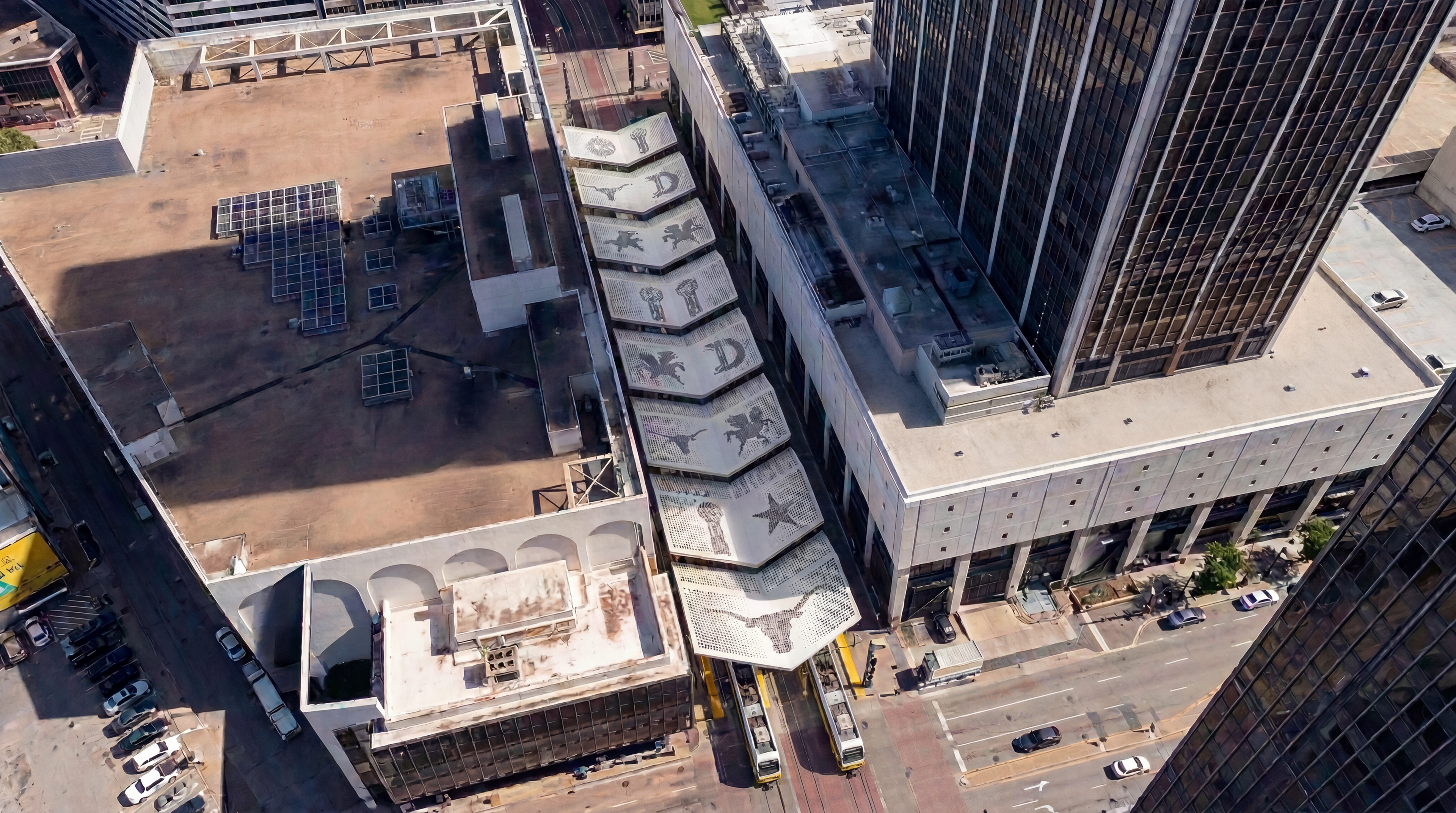
Contextual accuracy was a key objective throughout the visualization process. Using a real aerial reference of the Akard Station corridor adjacent to the current DART Headquarters, the design was tested directly within its existing urban conditions rather than placed into a generic or imagined environment. The AI-assisted rendering workflow preserved the underlying Rhino geometry and aligned the proposal with the surrounding buildings, street grid, and rail alignment, allowing the canopy to be evaluated at the true scale of downtown Dallas. This approach ensured that the visualization remained grounded in its actual context, demonstrating how the design integrates with the existing city fabric rather than existing as an isolated architectural image.