
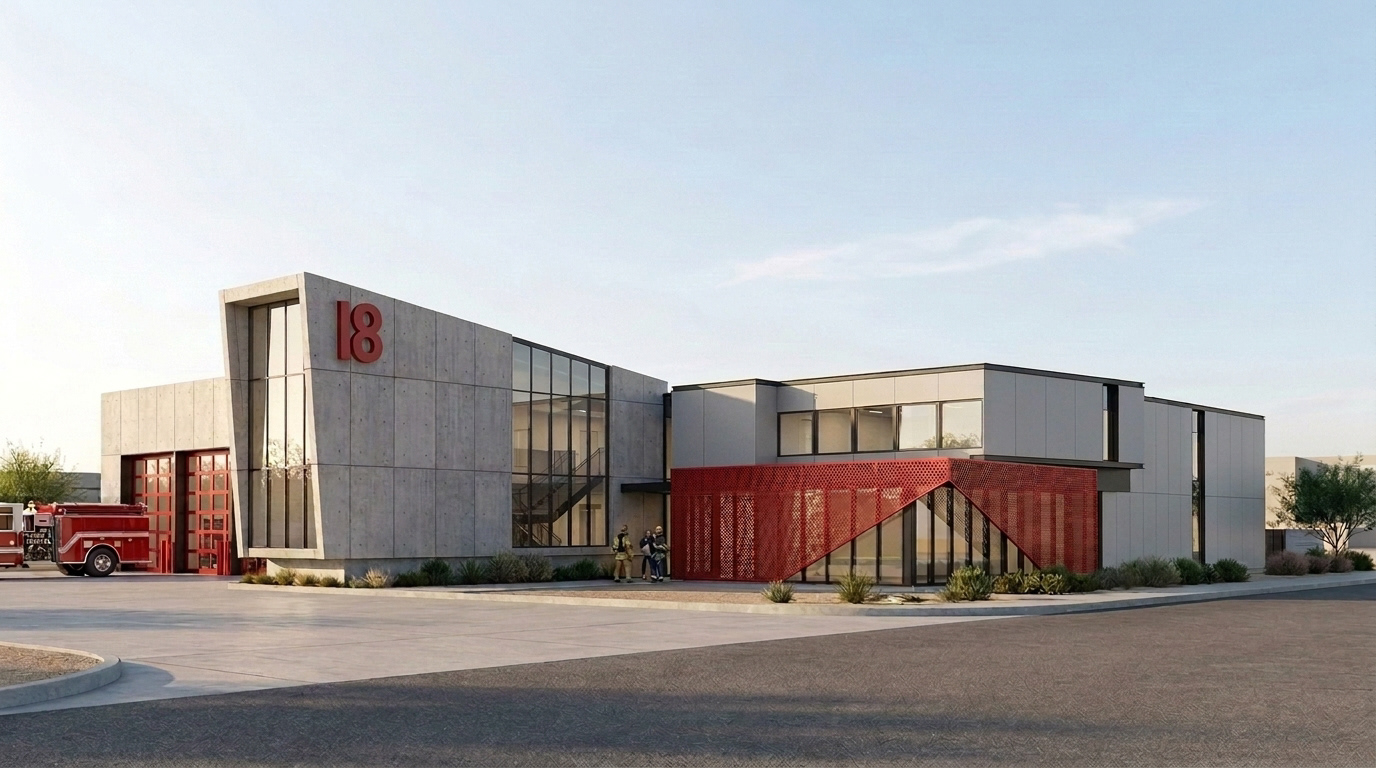
Author's Note:
This entire process was 100% AI automated. The only human intervention came through sketches, words, and directed feedback, with no manual modeling performed by the author. The design was shaped entirely through visual input, prompt-based instruction, and iterative critique.
Claude Station
The Cloud, Internet
01.1101° N, -10.0110° W
AI Vision: 005
Programs: Claude Agent, Rhino, Grasshopper, NanoBanana Pro 2
Typology: Civic
Process
This research documents an early test of a Claude-based agentic AI workflow connected to Rhino through an MCP, or Model Context Protocol, which acts as the bridge between the AI language model (LLM) and the design software. In simple terms, the MCP allows Claude not only to interpret prompts, but to interact with the modeling environment as part of a guided workflow. I began with a simple house study that was generated entirely through prompt-based direction, then moved to a more complex fire station study that combined both sketch input and prompt-based refinement to test how the system handled greater formal and architectural complexity. In both cases, the process moved quickly from concept toward modeled and render-ready output, with the full fire station workflow taking roughly one hour from sketch to model to render.
What stood out most was not just the speed, but the shift in the architect’s role. Rather than drawing every element manually, the process became one of managing, curating, and redlining the AI’s interpretation, closer to the way a project manager or senior designer reviews and directs work. This suggests that workflows like this may do more than accelerate production; they may also help train architects, especially younger designers, to become stronger editors, decision-makers, and curators of design intent through iteration.
01_Testing Initial Capabilities
"Design me a simple house in Rhino."
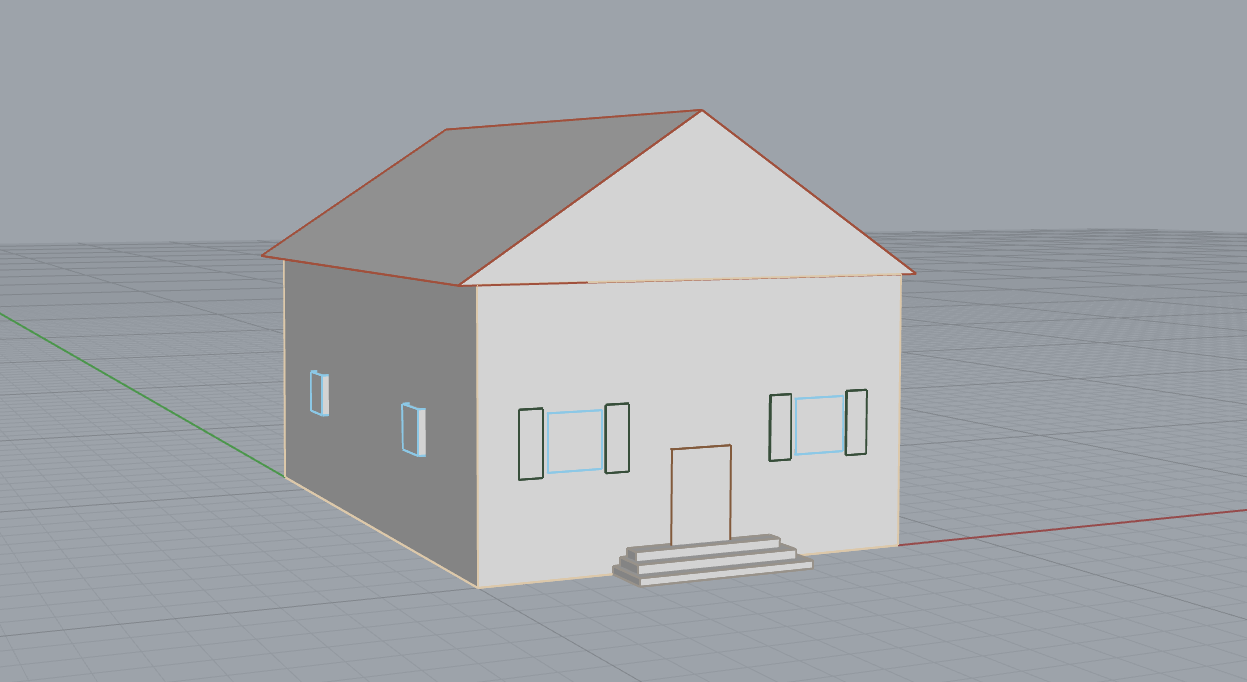
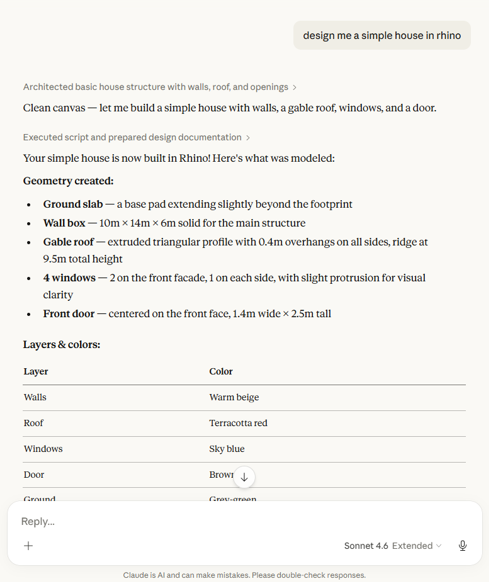
The baseline test used a simple house as a controlled prompt-only study to evaluate Claude’s contextual reasoning within an agentic modeling workflow. Starting from a minimal written request, Claude interpreted the architectural intent, organized the model into logical components, and generated a basic Rhino massing composed of a slab, wall volume, roof, windows, and door. The value of the exercise was not in the sophistication of the house itself, but in demonstrating that the system could move from language to geometry through a structured sequence of decisions rather than a single output action.
Subsequent iterations revealed the strength of the workflow. When asked to refine the model, Claude maintained continuity with the original prompt and translated broad design requests into specific architectural interventions, including standing seam roofing, façade articulation, trim, siding, shutters, and entry detailing. The chat logs show that it reasoned through proportion, spacing, and surface orientation before making changes, indicating an ability to work strategically within the context of the prompt. As a baseline test, the simple house demonstrated that the agent could not only generate geometry, but also sustain architectural intent through iterative refinement.
02_Refining Initial Capabilities
"Lets make it a bit more detailed. Can you make the roof look like a standing seam roof and add detail to the facade"
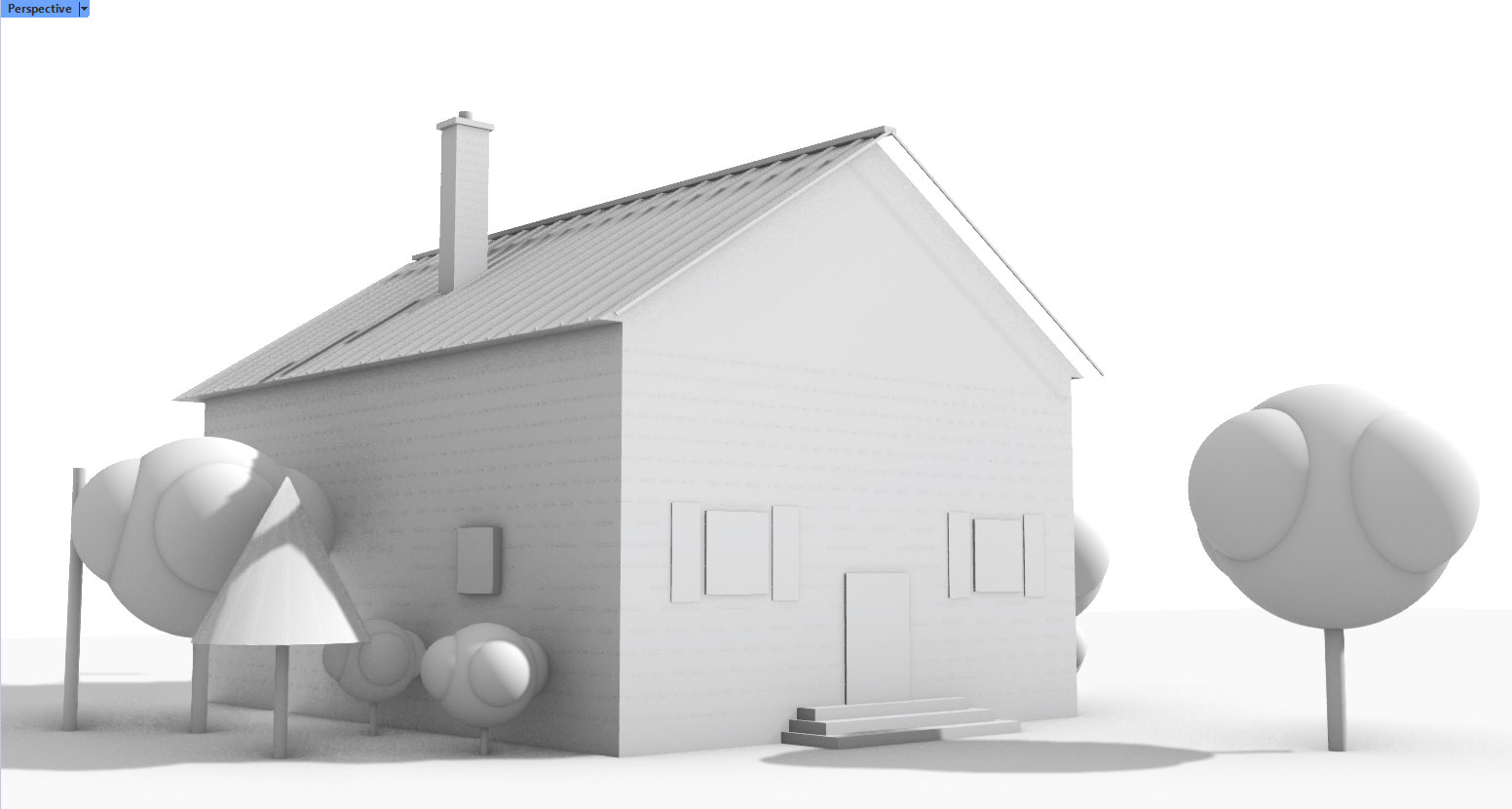
House entirely generated and modeled by AI, refined from pure prompt-based imagination.
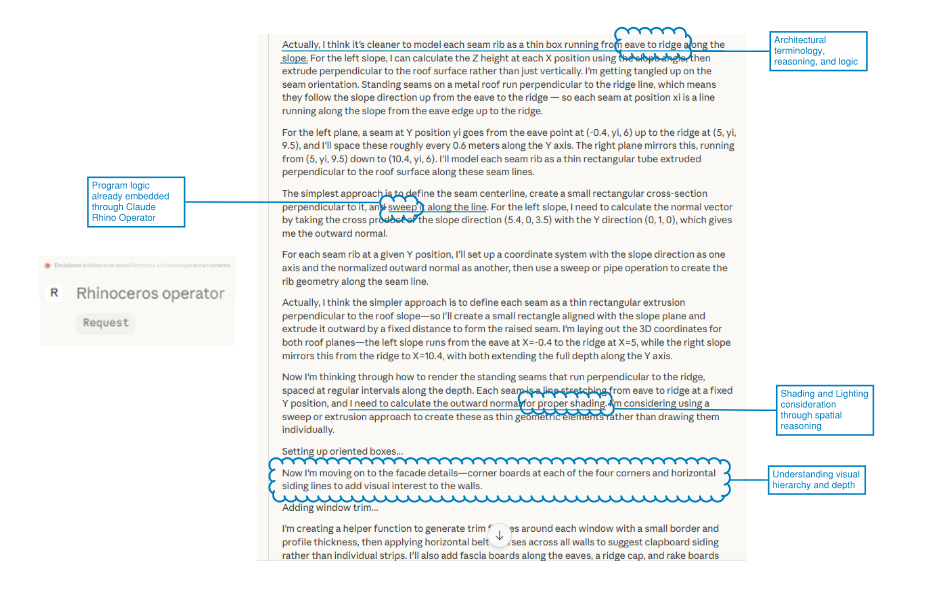
One of the clearest findings from this test was that Claude’s value was not limited to command execution, but extended into reasoning across both the modeling environment and the architectural problem itself. Through the MCP, or Model Context Protocol, the AI is able to interface with Rhino in a way that turns language into actionable operations inside the design software. In practice, this means the model is not only interpreting prompts semantically, but also reasoning through how to carry them out within the constraints of the program: identifying geometry types, understanding coordinate relationships, calculating slopes and normals, sequencing operations like sweeps or extrusions, and adjusting its approach when a cleaner or more constructible method becomes apparent. The MCP acts as the bridge that allows this reasoning to become operational, enabling the AI to engage the interface through a structured chain of decisions rather than producing disconnected text outputs.
At the same time, the reasoning visible in the workflow is architectural, not purely computational. The analysis shows Claude moving between program logic and design logic: using architectural terminology, interpreting roof seams in relation to ridge and eave conditions, considering outward normals and shading for how elements read visually, and understanding façade depth, trim, siding, and hierarchy as more than decorative additions. It was not simply modeling shapes; it was reasoning about how those shapes should behave, read, and be organized as architecture. This is what makes the workflow significant: the MCP enables manual control of the modeling environment through program reasoning, while the language model simultaneously applies architectural reasoning to guide what should be built, how it should be built, and why a particular solution is more coherent than another.
03_Stress Testing
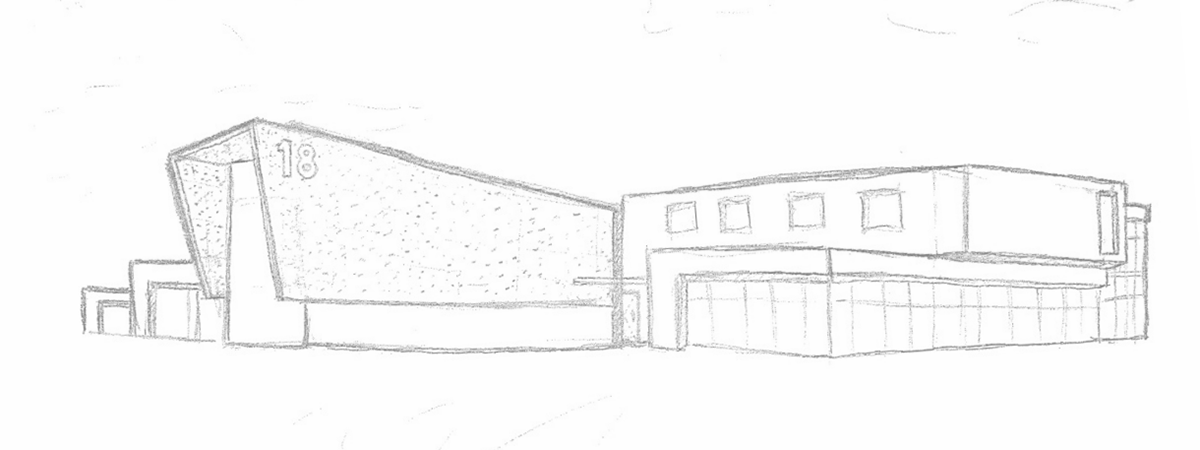
"Let's try something a bit more complex. Here is a sketch of a concept fire station. Please model it in rhino and use the door in the image as reference for scale."
Sketch Analysis
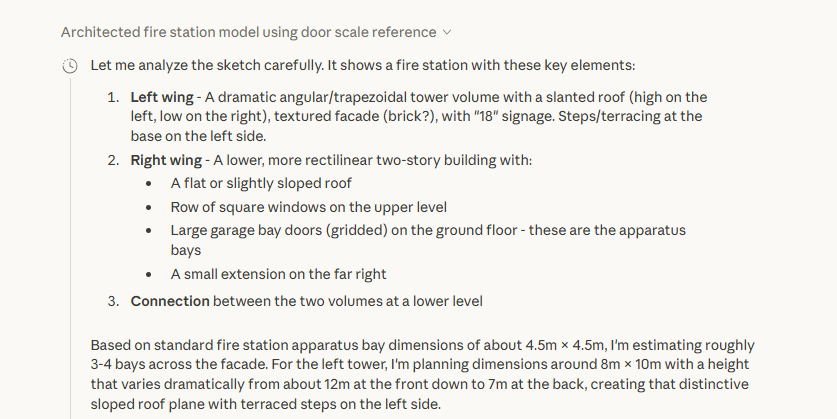
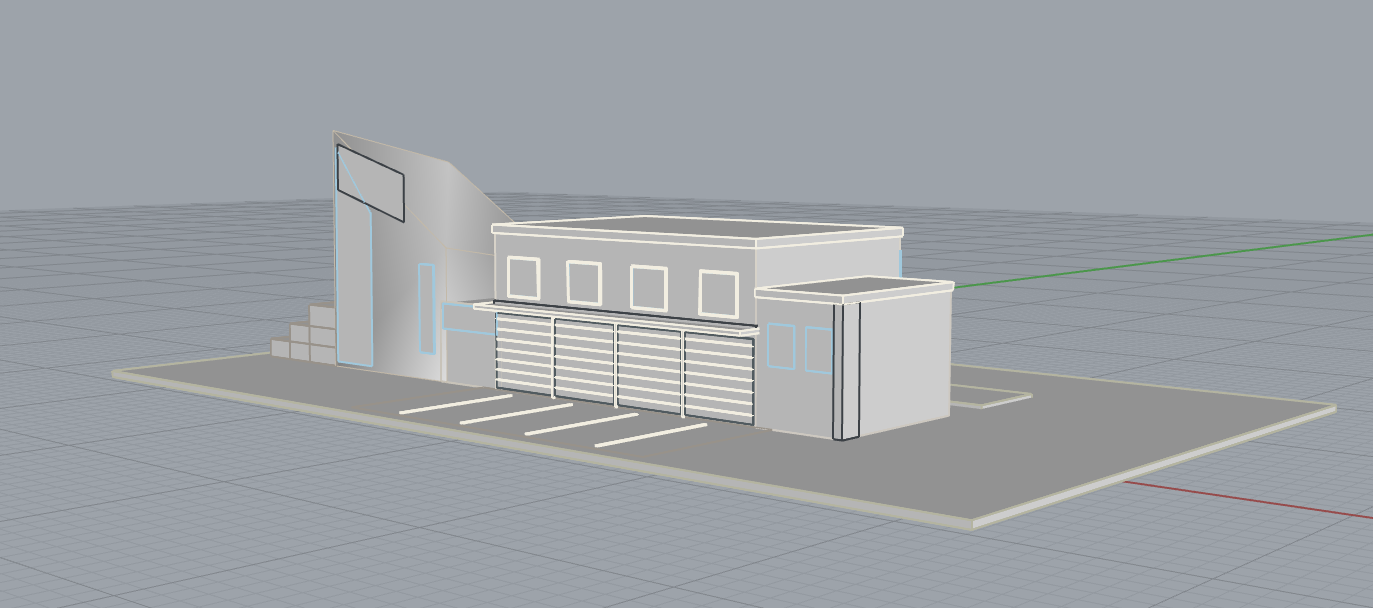
The stress test moved into a more demanding sketch-to-model workflow using a fire station concept. Unlike the baseline house study, this phase required Claude to interpret a loose perspective sketch rather than respond only to text. Its initial reasoning shows that it parsed the drawing into major architectural components — the angular tower, connector, apparatus bay wing, and secondary support volume — and then assigned likely dimensions, roof forms, glazing conditions, and site/apparatus relationships based on the visual cues in the sketch. Rather than tracing geometry literally, it interpreted the image as an architectural massing study and translated it into a structured modeling strategy.
Initial Model Generation.
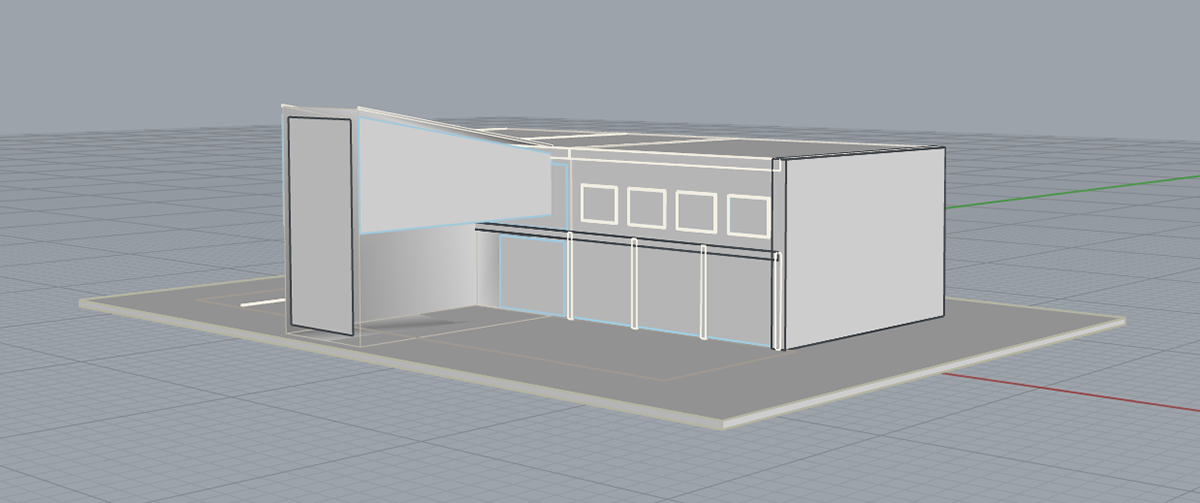
Focalized Refinement of Angled Mass
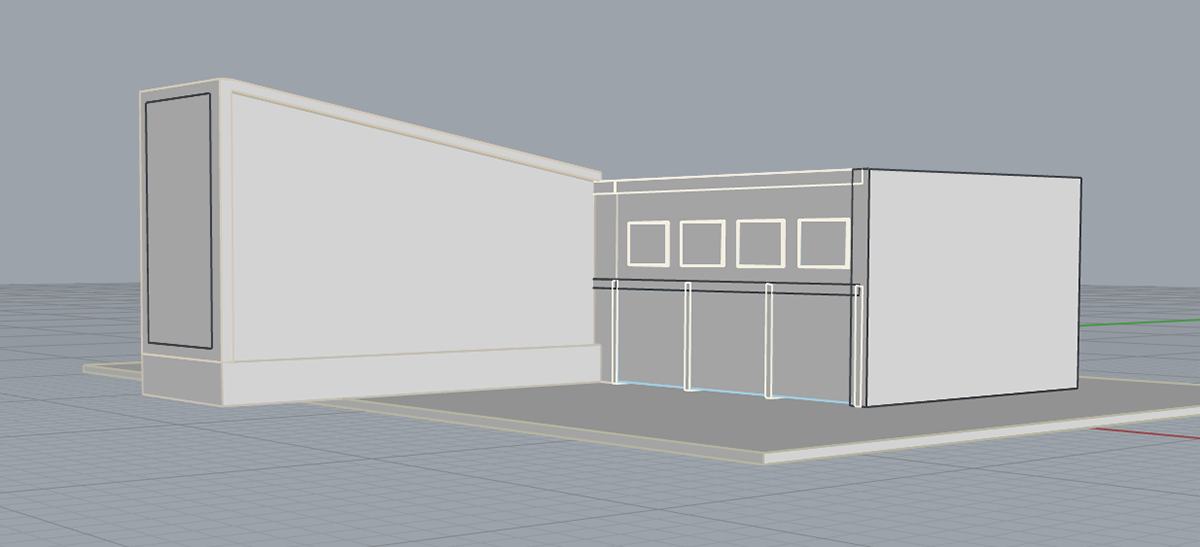
Focalized Refinement of Angled Mass Detail
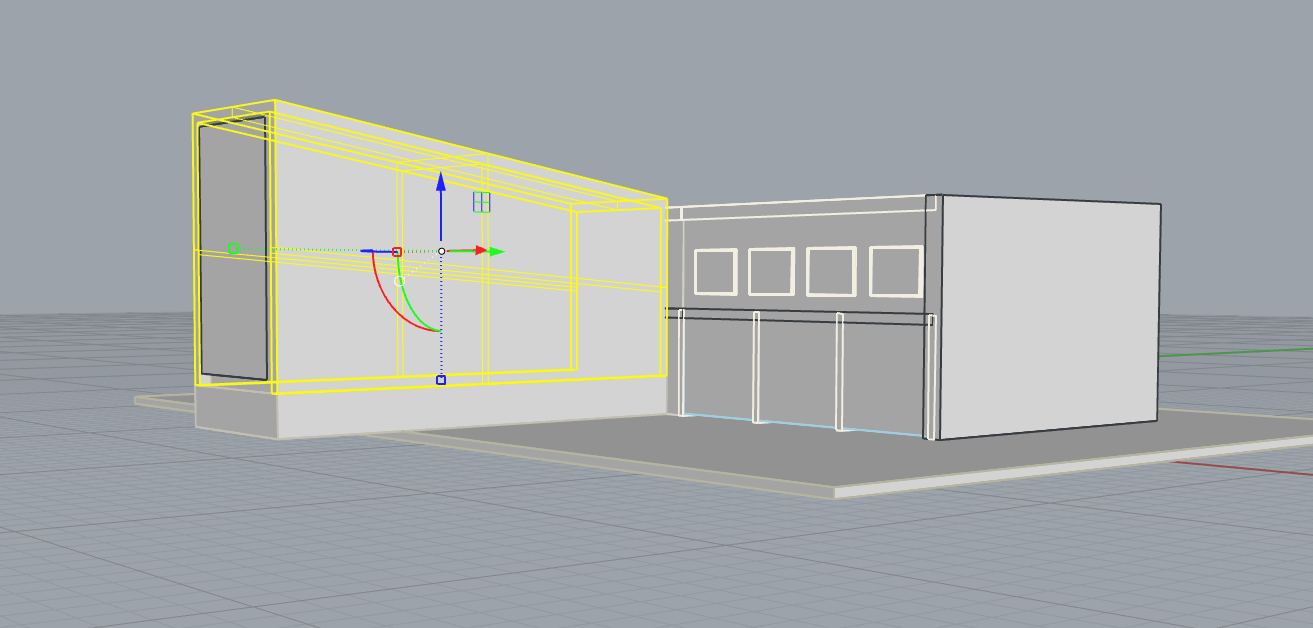
Focalized Refinement of Facade Skin
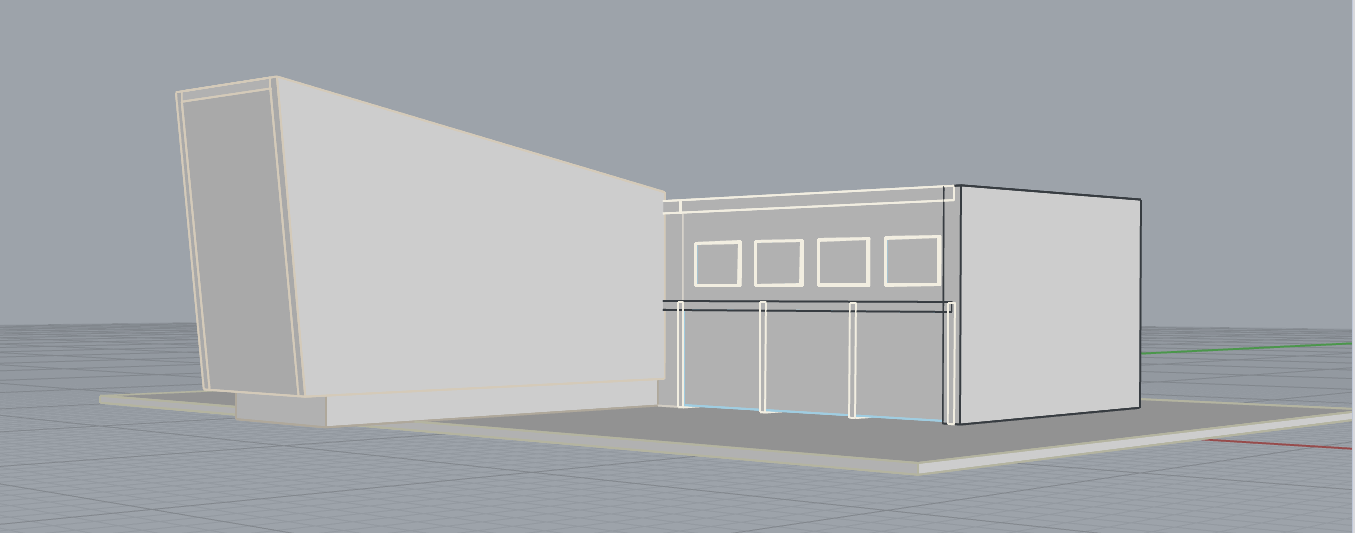
Geometrical Refinement of Angled Mass
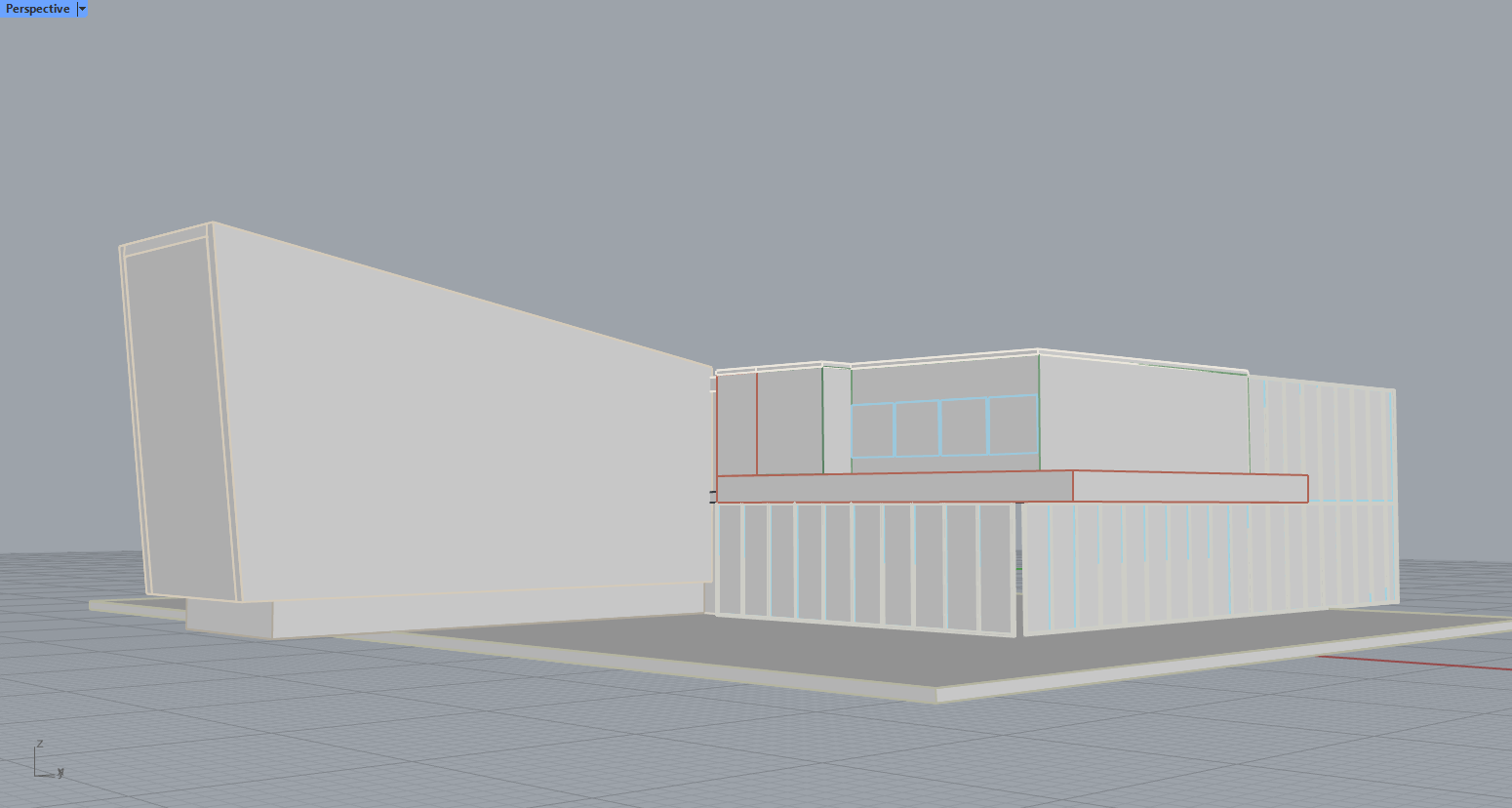
Focalized Refinement of Residential Section of Fire Station
Iterative Process
The fire station study made one thing clear: one prompt was not enough
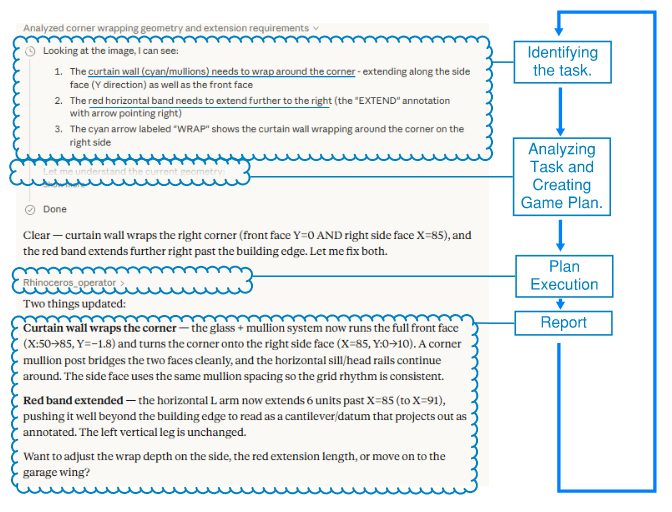
So everyone can relax...we are not being replaced yet... The workflow depended on iteration, intelligible guidance, and precise feedback from the architect, often through literal redlining of the viewport or tightly focused prompting on one element at a time. Rather than replacing an experienced designer or Rhino technician, it points to a different opportunity: allowing designers, managers, principals, and even the C-suite — especially those who may be less fluent in today's complex software — to still direct architectural outcomes through judgment, critique, and clear intent.
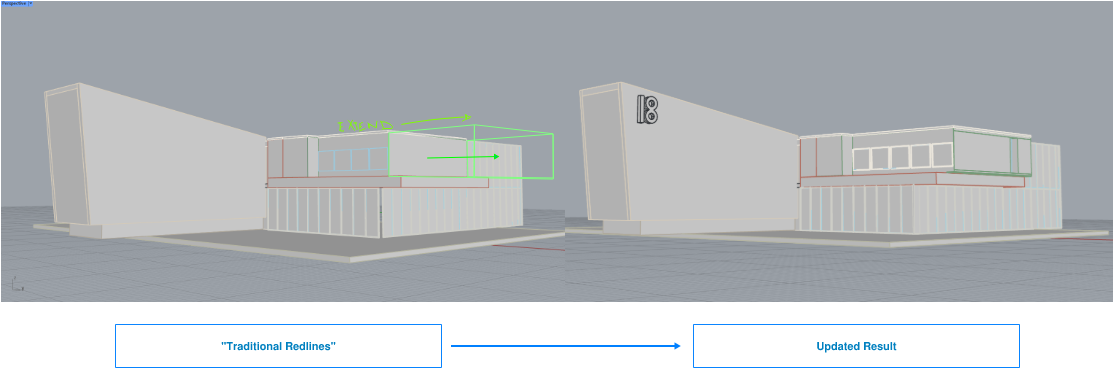
Across the process, the revisions moved from broad massing corrections into more specific architectural refinements. Early rounds adjusted the overall silhouette and proportion of the primary volume, while later iterations clarified relationships between core mass, outer skin, plinth, and enclosure logic. The value of the workflow was not that it got the model right immediately, but that it could absorb targeted criticism and progressively improve through guided revision.
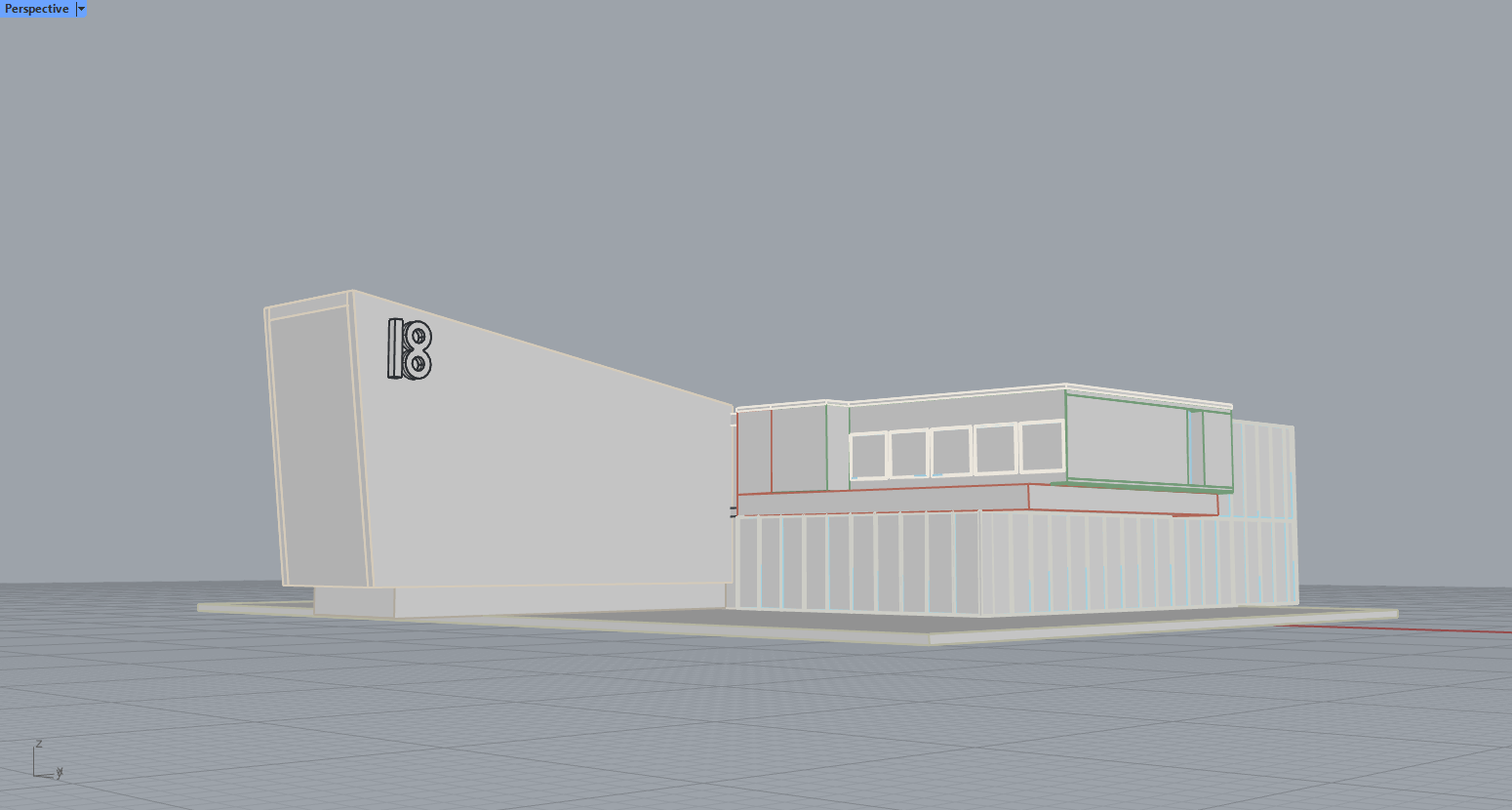
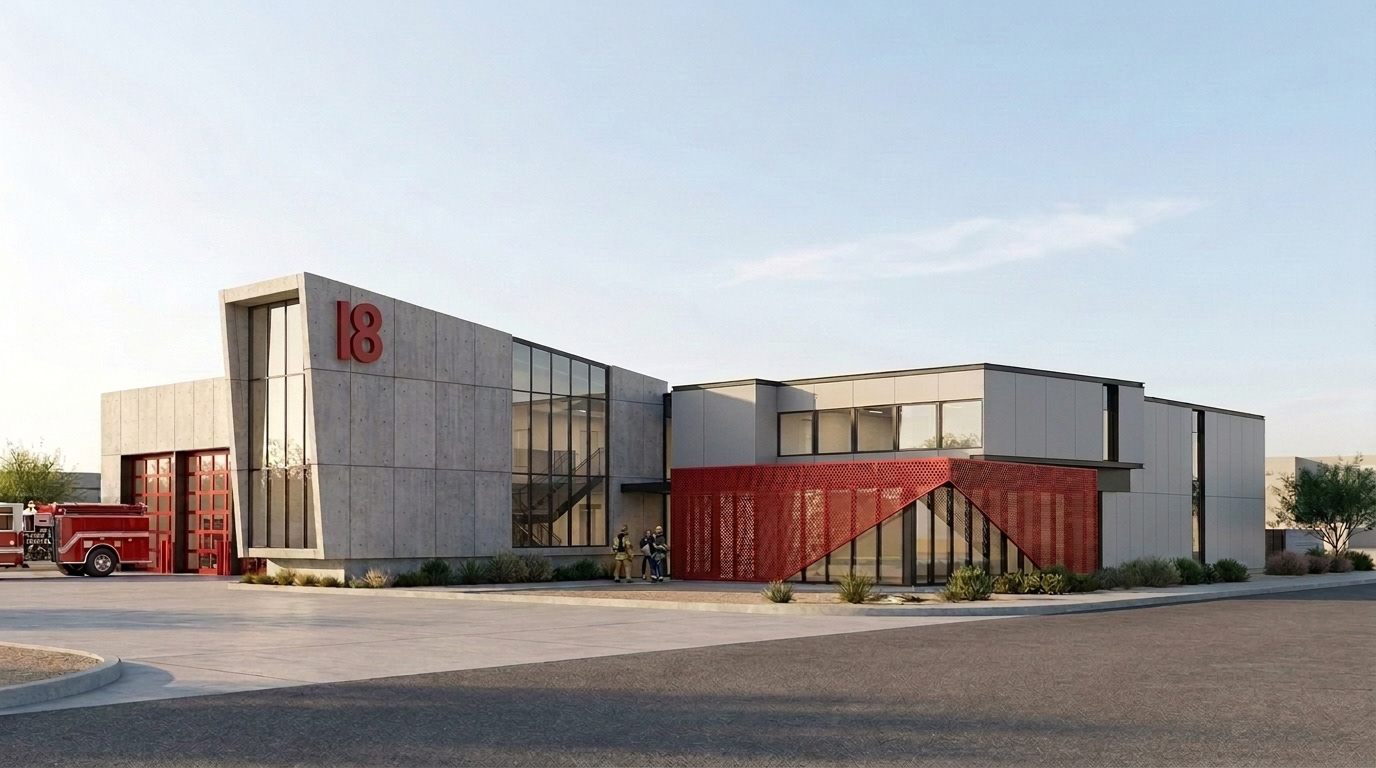
The final result produced by Claude within Rhino’s modeling context, shown here after a sequence of iterative refinements (left to right). Each pass incrementally clarified the original sketch through adjustments to massing, façade hierarchy, enclosure, and architectural expression. Rather than emerging from a single output, the model was developed through an agentic workflow of interpretation, correction, and progressive spatial resolution.
Redlining and Critiquing
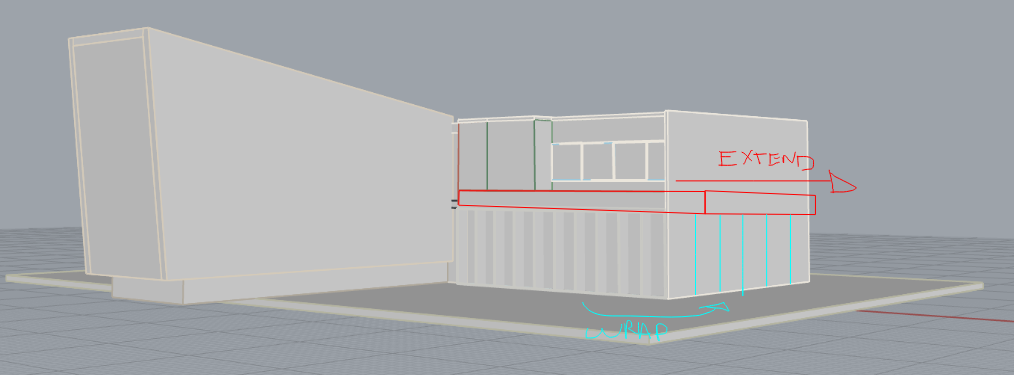
As I worked through ways to critique and resolve the AI output, I found myself naturally defaulting to familiar architectural habits: redlining, sketching over the viewport, and isolating specific elements for revision. After all, as the old saying goes, “if it ain’t broke, don’t fix it”, because the method of critique never needed to change, only the medium did. The critique happened through traditional markups that any junior designer would recognize: redlines over viewports, quick diagrammatic overlays, and sketches on top of the model much like tracing paper over a drawing set. In that sense, the process was not entirely new; the method of directing design remained familiar, but the medium changed. It still relied on identifying what was wrong, isolating the issue, and giving clear visual guidance — only now the response cycle was significantly faster.
Author's Opinion
This test suggests that the real value of the workflow is not in fully autonomous design, but in how effectively AI can respond to architectural judgment. The model was able to translate prompts and sketches into progressively refined geometry, but its strongest results came through directed critique, selective redlining, and iterative correction. In that sense, the experiment reinforced that design authorship still depends on the architect’s ability to question, evaluate, and guide the outcome rather than simply generate it.
More importantly, the same logic does not have to remain limited to one modeling environment. The underlying principles — prompt-based direction, targeted critique, redlined feedback, and iterative refinement — could be extended into other architectural software such as Revit and beyond. That opens the door for a broader range of architects to contribute meaningfully, including those who may not have the highest level of software fluency. Instead of defining value primarily by command knowledge or BIM expertise, workflows like this may shift emphasis back toward architectural intelligence: the ability to think critically, ask the right questions, recognize what is working, identify what is wrong, and direct a design toward resolution.
In that way, AI may not distance architects from their discipline, but return them closer to its core.