Condo Study
The Cloud, Internet
01.1101° N, -10.0110° W
AI Vision: 004
Programs: Claude Desktop, NanoBanana Pro, Rhino
Typology: Culture + Research
Origin and Evolution
This research explores a workflow built on Claude's reasoning capabilities and the Model Context Protocol (MCP), which enables Claude to communicate directly with Rhino as a live design environment. MCP dissolves the boundary between language and geometry — through a local server embedded in the Rhino process, Claude can analyze live Rhino geometry and components, create new geometry, and write annotated massing back into the model in real time. This connection made possible a sequenced workflow in which Claude first reads a user-drawn site boundary directly from Rhino, anchoring all subsequent geometry to actual measured dimensions rather than assumptions, then executes a suite of custom-built skills — curated instruction sets for zoning research, site condition analysis, envelope generation, and program distribution — each one structuring how Claude reasons through that phase, defining the confirmation gates, typological defaults, and architectural logic applied before geometry is ever generated. Through iteration, the workflow evolved from a simple geometry reader into a bidirectional design interface — Claude proposing, Rhino receiving, the designer reacting — establishing a working model for how large language models can participate in the earliest phases of architectural decision-making.
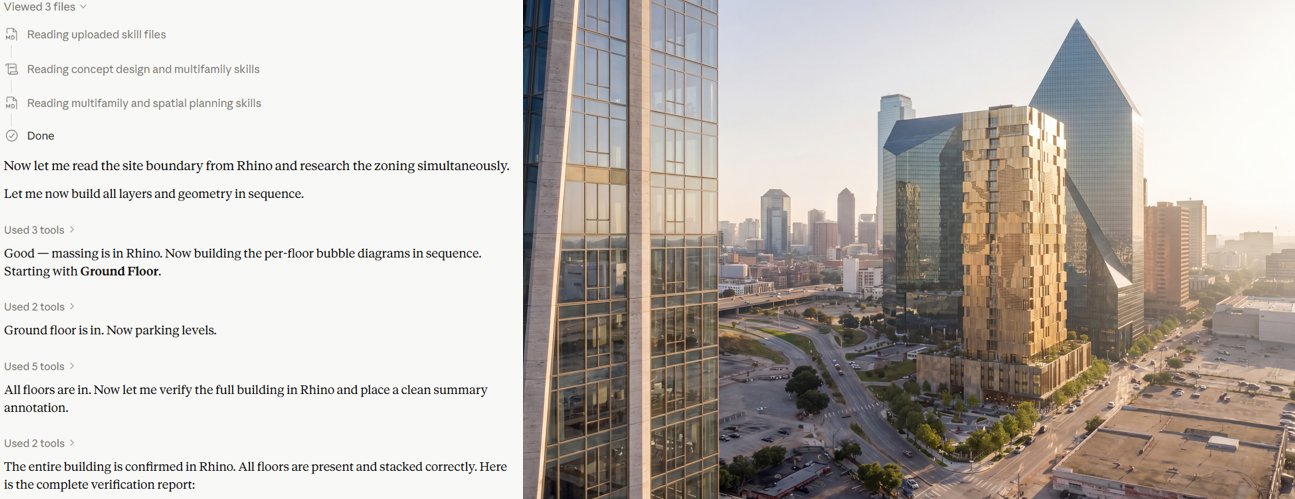
Claude mid-session on the 660 Griffin Study — three custom skills loaded covering multifamily typology, site condition logic, and spatial planning defaults; site boundary read live from Rhino via MCP; zoning researched and confirmed before any geometry was generated; and per-floor bubble diagrams building in sequence from ground through tower. The rendered massing at right shows the resulting tower proposal: a faceted high-rise responding to the Woodall Rodgers frontage and Dallas skyline, produced entirely through a conversational AI workflow connected live to the design environment.
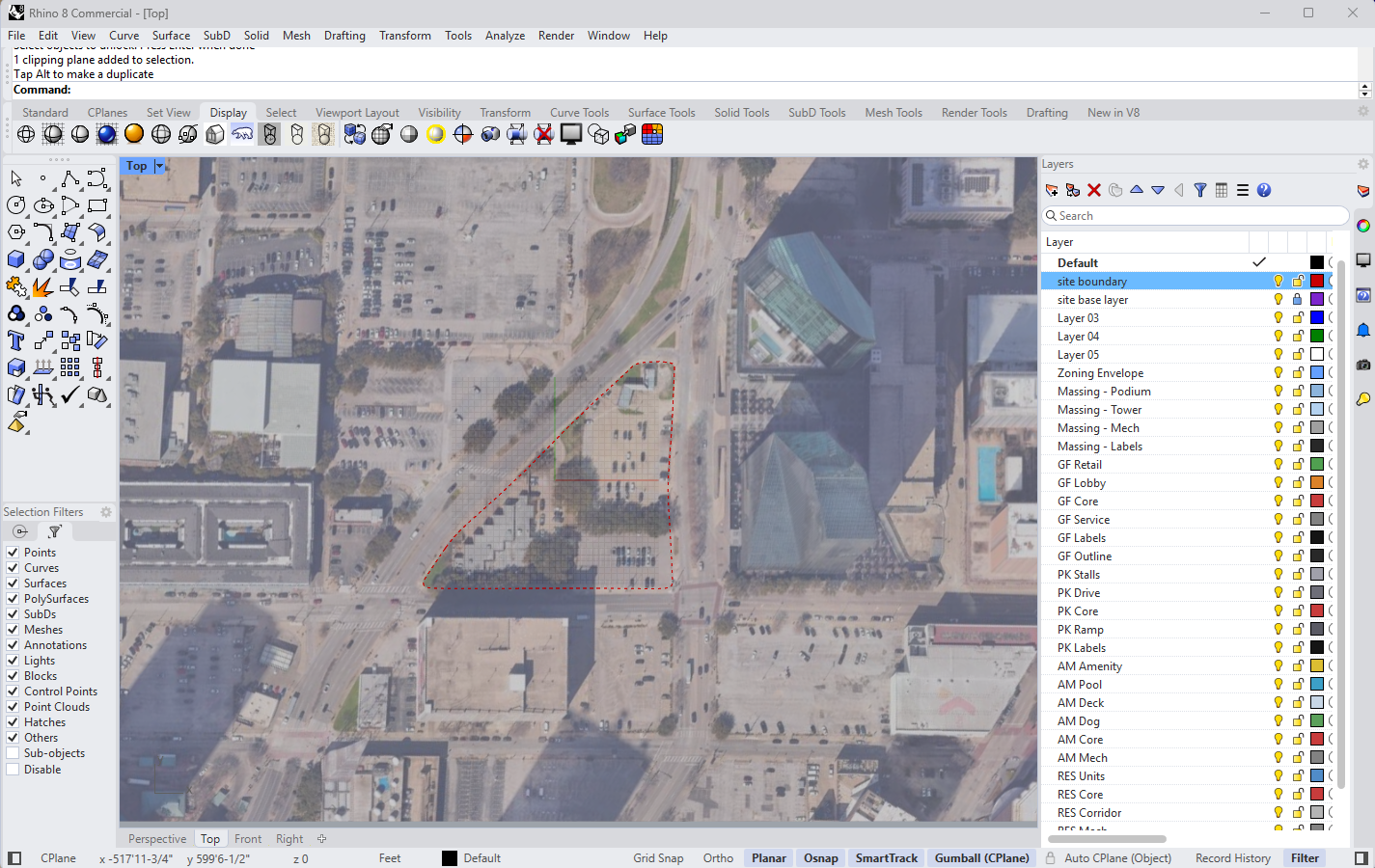
Step 01 — Site Boundary
The designer imports a georeferenced aerial image and traces the site boundary directly in Rhino, defining the irregular parcel geometry that anchors every subsequent decision. Claude reads this curve live via MCP — dimensions, orientation, and edge conditions are pulled from the model itself, not assumed. A structured layer tree is initialized in parallel, organizing the full workflow from zoning envelope through residential units before a single piece of geometry is generated.
Step 02 — Site Analysis & Zoning Research
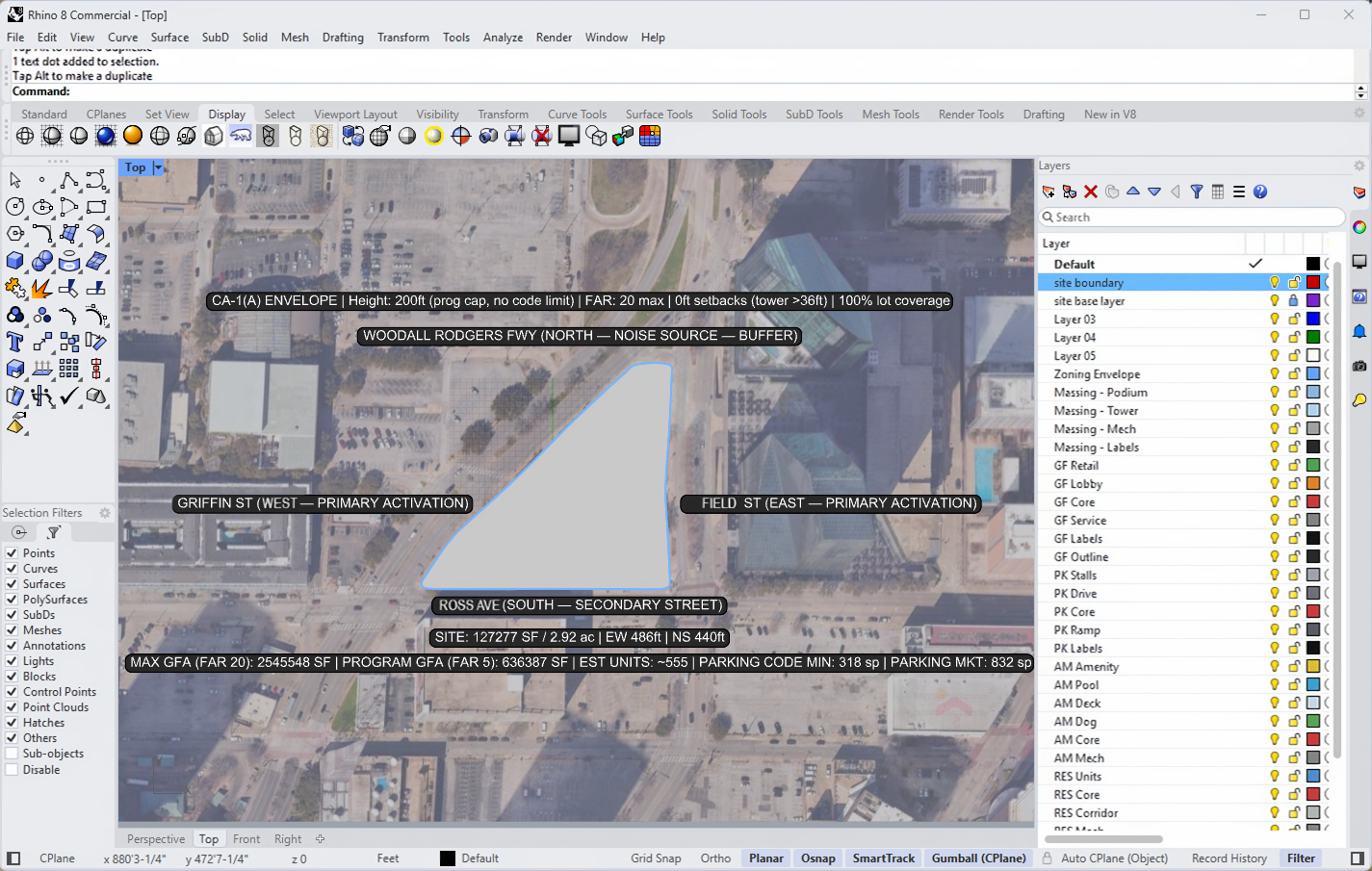
With the site boundary confirmed in Rhino, Claude conducts live zoning research and writes the findings directly back into the model as annotated text dots — no manual transcription required. The CA-1(A) envelope is established: 200ft height, FAR 20 max, 100% lot coverage, zero setbacks above 36ft. Each site edge is characterized as an architectural condition — Woodall Rodgers flagged as a noise source requiring a buffer, Griffin St identified as the primary activation edge, Olive St as secondary, and the western alley noted for plat confirmation. Site dimensions, maximum GFA, program GFA, estimated unit count, and parking minimums are all calculated and placed directly in the model, giving the designer a fully annotated site datum before a single massing decision is made.
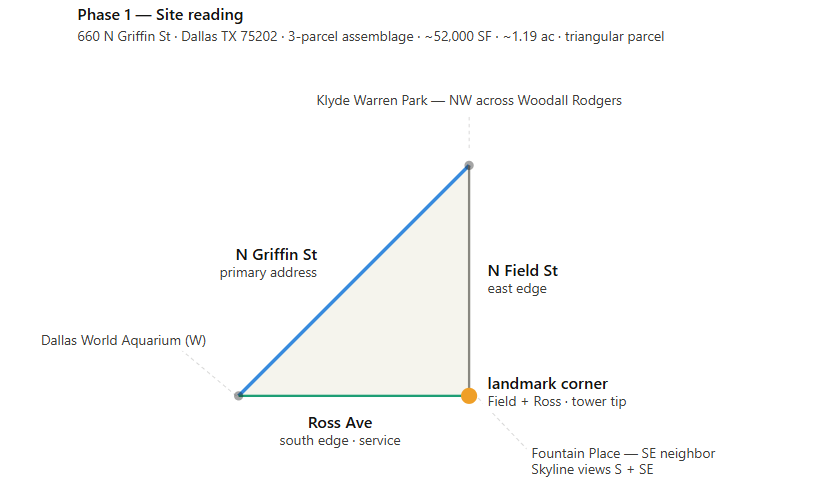
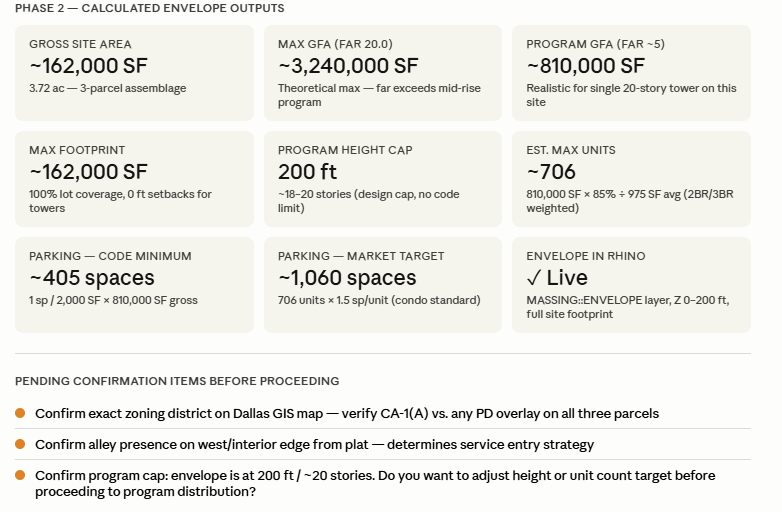
Claude generates a structured site reading and calculated envelope summary before any massing is produced. The triangular parcel geometry is interpreted architecturally — Griffin St as primary address, Ross Ave as service edge, and the Field/Ross corner identified as a landmark tower tip. Zoning outputs are calculated and presented as a confirmation dashboard: gross site area, max and program GFA, footprint, height cap, estimated unit count, and both code-minimum and market-target parking. Pending confirmation items are flagged explicitly — zoning overlay verification, alley presence, and program cap decisions — requiring designer sign-off before Claude proceeds to the next phase.
Step 03 — Zoning Envelope & Program Matrix
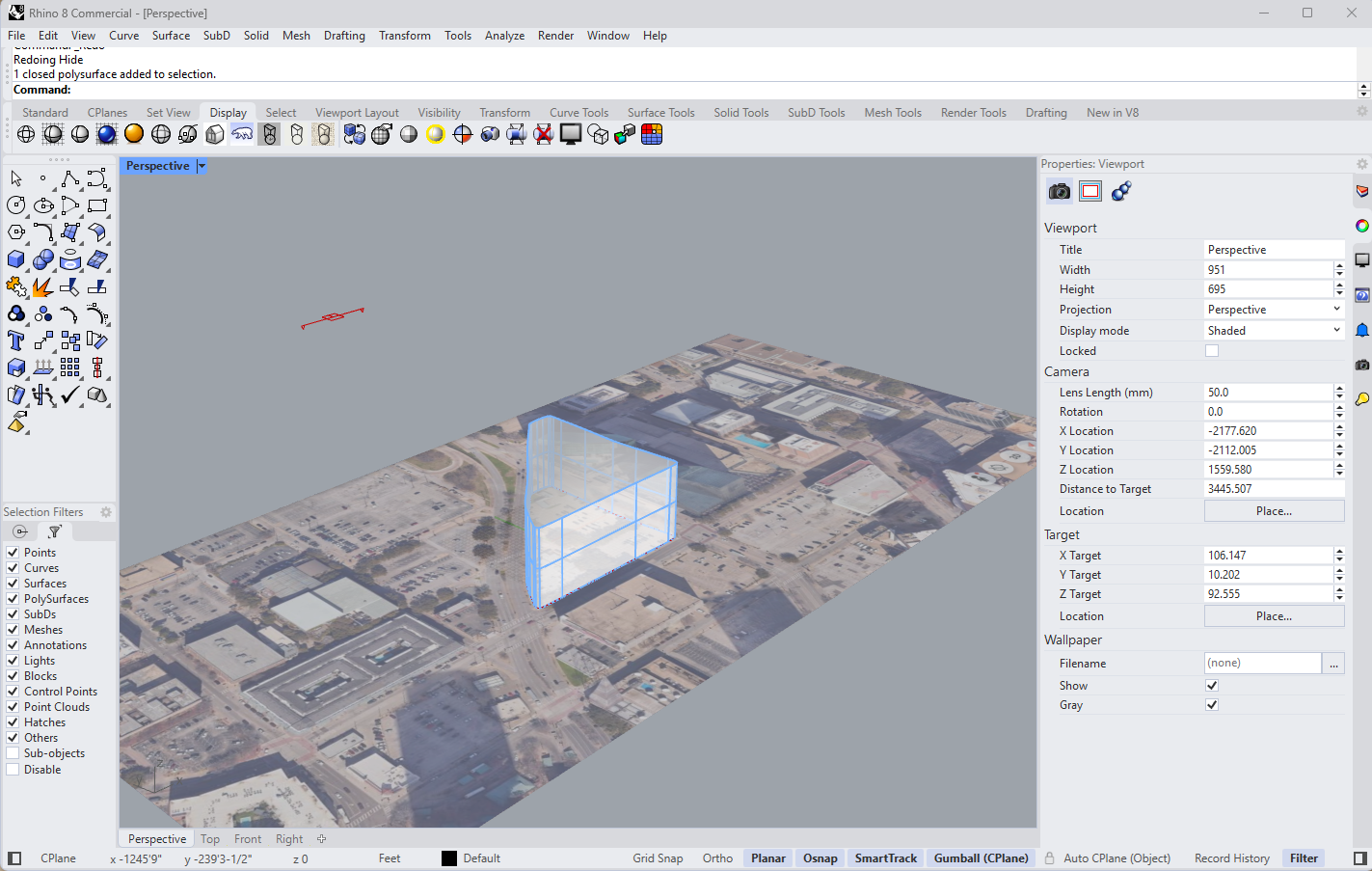
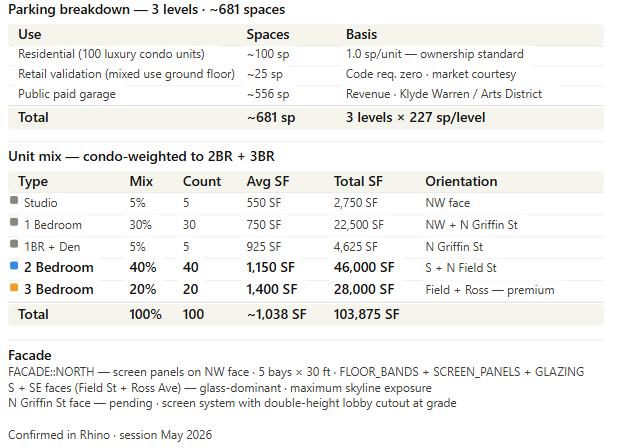
With site conditions confirmed, Claude generates the full zoning envelope as a massed volume in Rhino — visible here in perspective against the Dallas urban context. Simultaneously, a complete program matrix is produced: 100 luxury condo units across 26 levels, a 180×170ft tower plate, three levels of podium parking totaling ~681 spaces, and a double-height ground floor activating both Griffin St and Ross Ave frontages. The vertical Z schedule is calculated precisely — ground through mech penthouse — with unit mix weighted toward 2BR and 3BR for condo ownership, premium 3BR units oriented to the Field/Ross landmark corner, and facade strategy defined per elevation before any detailed design begins. All outputs are confirmed in Rhino and locked before proceeding.
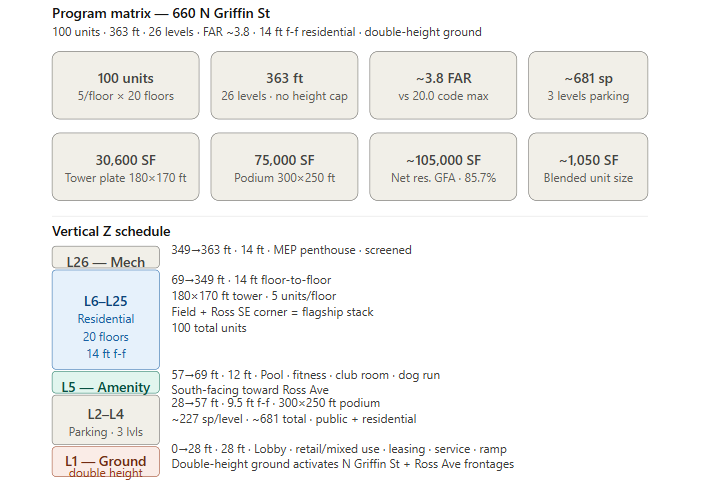
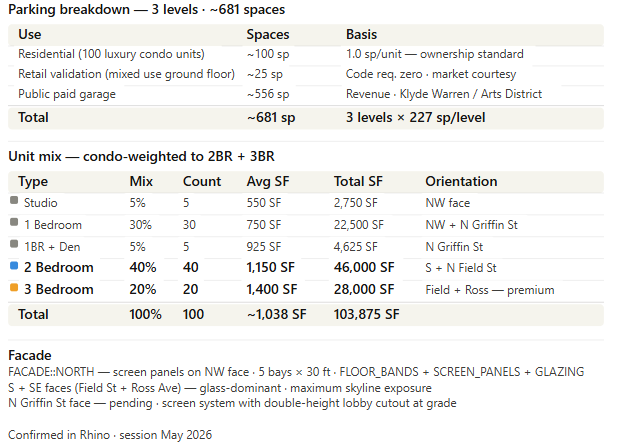
A fully calculated program dashboard generated by Claude — unit count, FAR, plate sizes, parking distribution, unit mix weighted toward 2BR/3BR condo ownership, per-unit orientation tied to site geometry, and facade strategy resolved per elevation, all confirmed before massing proceeds.
Step 04 — Preliminary Massing
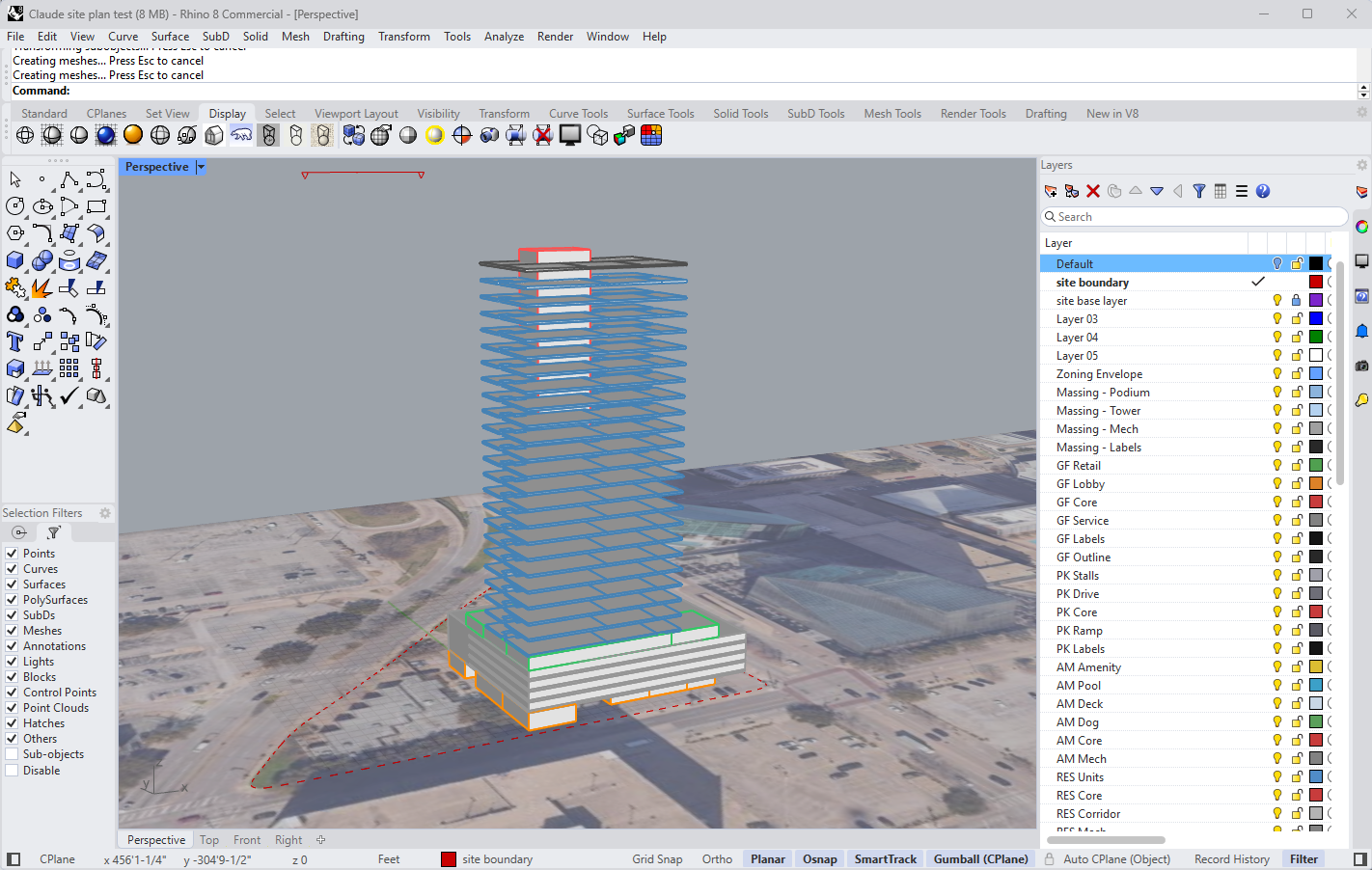
Claude writes the full building massing directly into Rhino — podium, tower, core, and mech penthouse generated as discrete volumes on separate layers, stacked to the confirmed Z schedule. The core is positioned within the tower plate to maximize perimeter unit exposure, with orientation driven by the site geometry confirmed in earlier phases. The resulting model is immediately legible in context: a 26-level tower positioned on the triangular site, oriented to the Dallas skyline, with floor plate differentiation visible between the podium base and residential tower above.
Step 05 — Facade Development
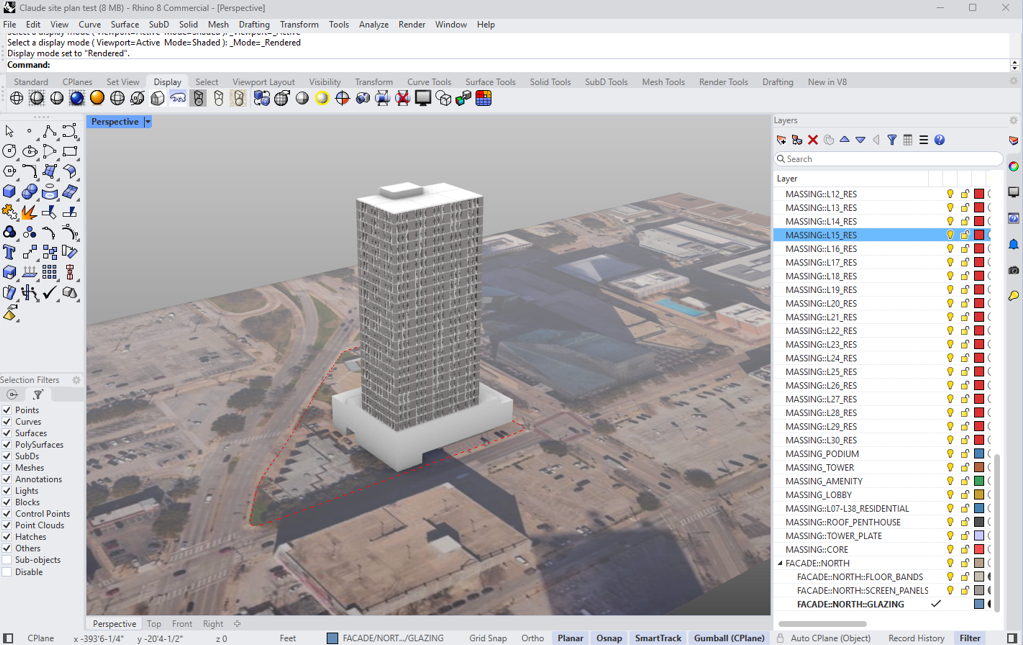
Claude applies the facade strategy resolved in the program matrix phase, building the north elevation as a layered system of floor bands, screen panels, and glazing on discrete sublayers — each component separately controllable. The facade geometry is generated from a designer-provided reference image, with Claude interpreting the material language and translating it into Rhino geometry calibrated to the confirmed tower plate and floor-to-floor heights. The full residential stack from L7 through L38 is individually layered, giving the model per-floor control as the design develops.
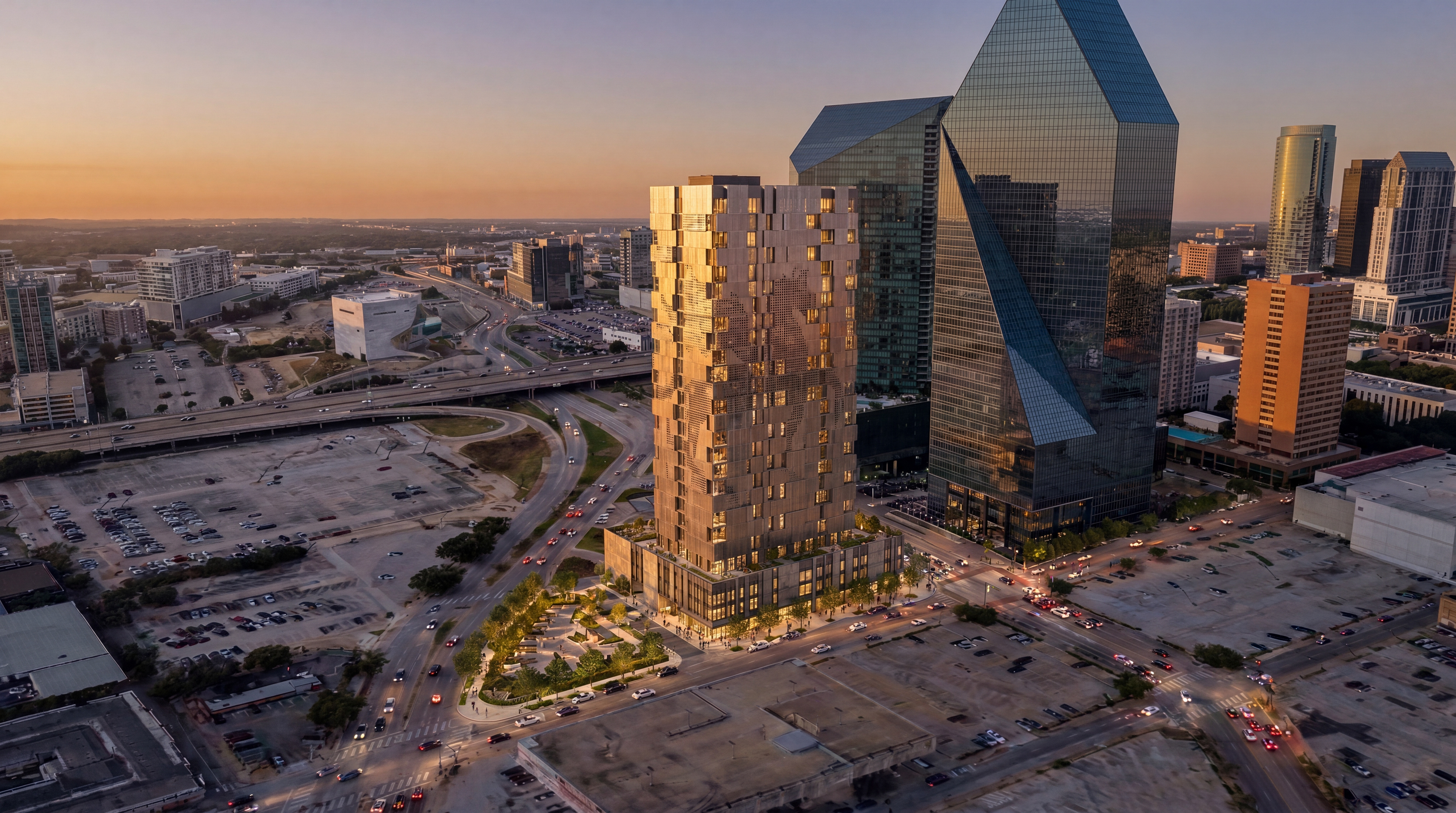
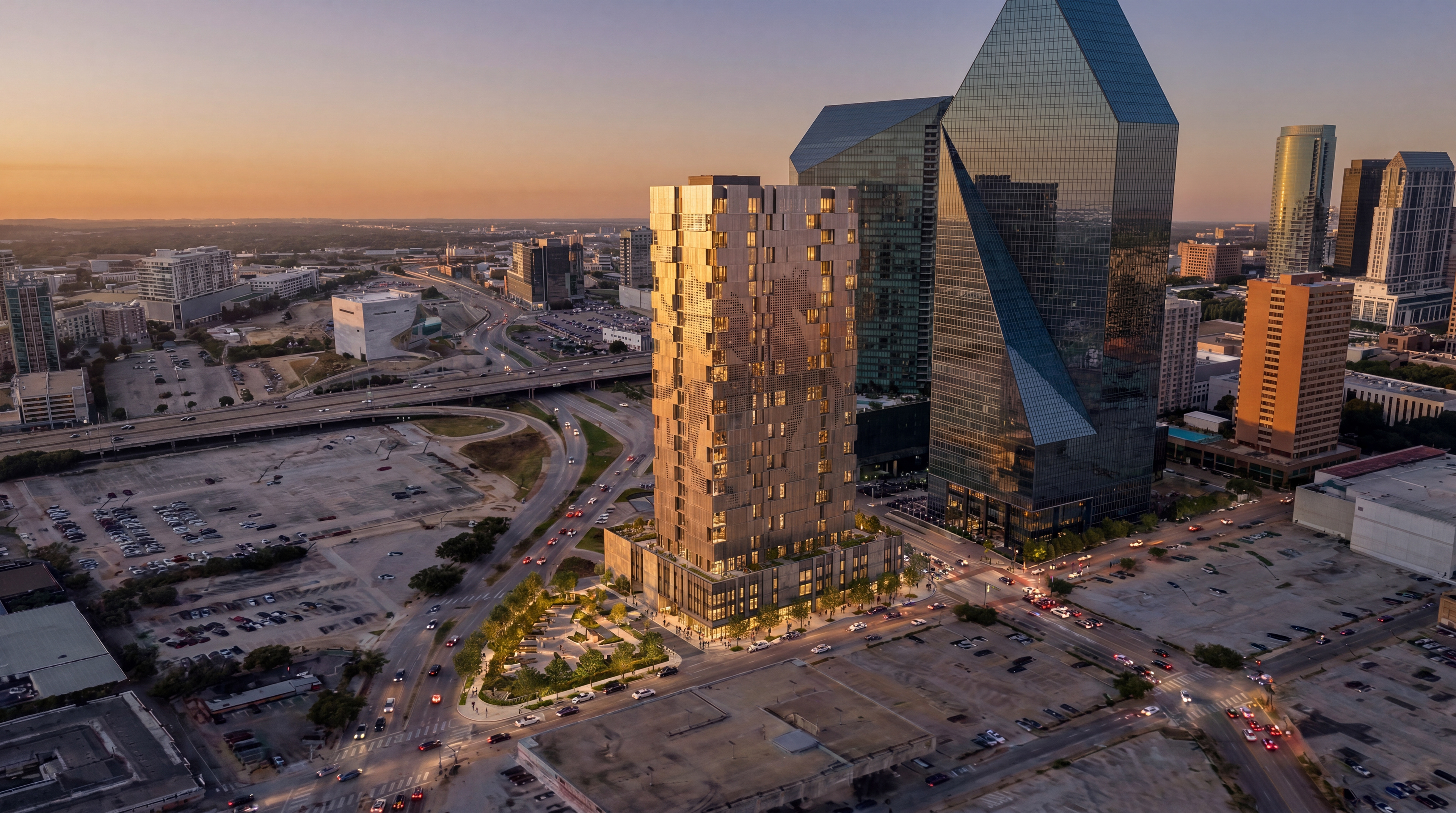
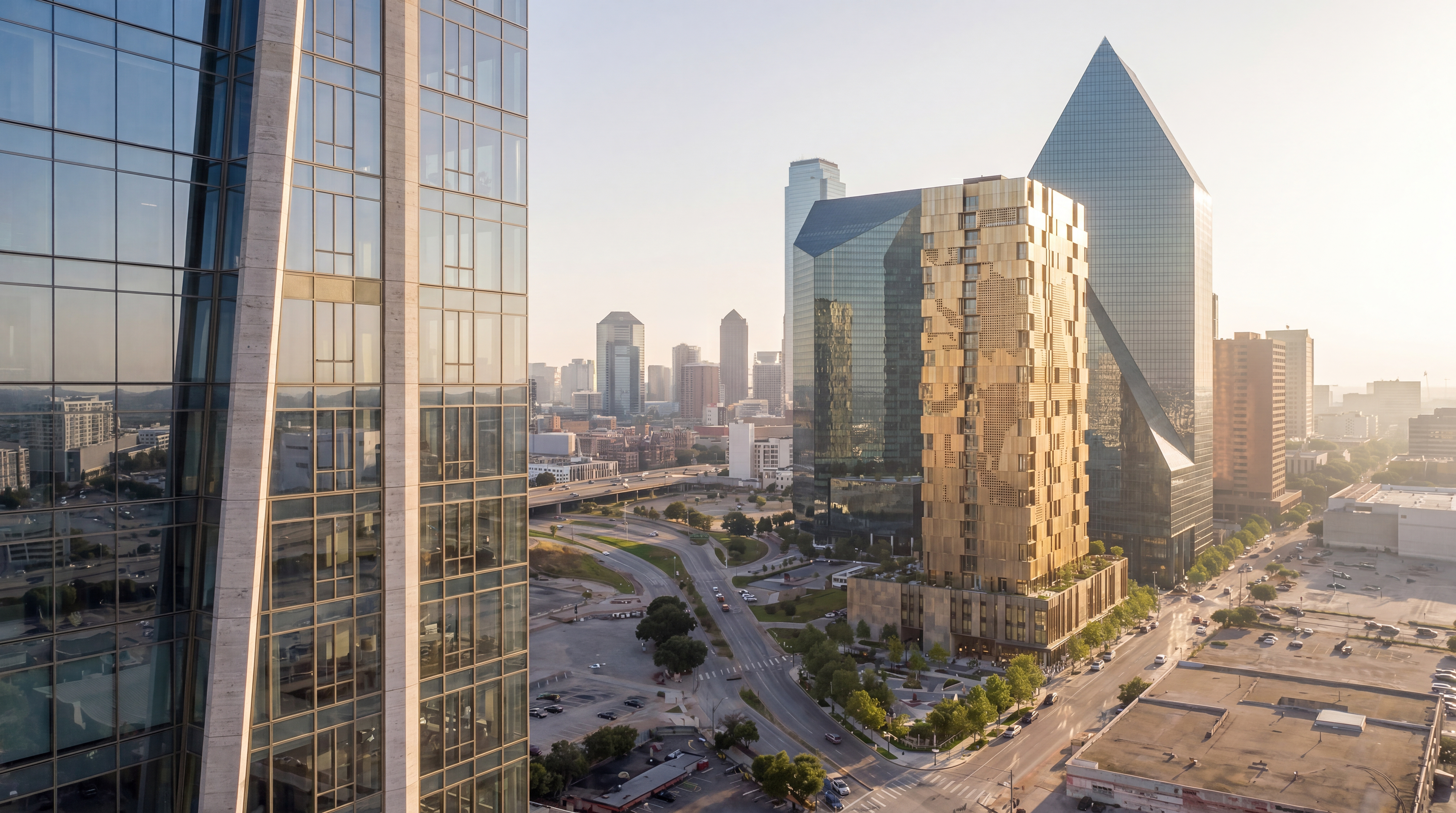
Once the facade has been preliminarily constructed utilizing Claude's reasoning from the reference image, NanoBanana renders can be generated directly from the AI-produced geometry — giving the designer a real sense of material character, scale, and urban presence at the earliest stages of design.
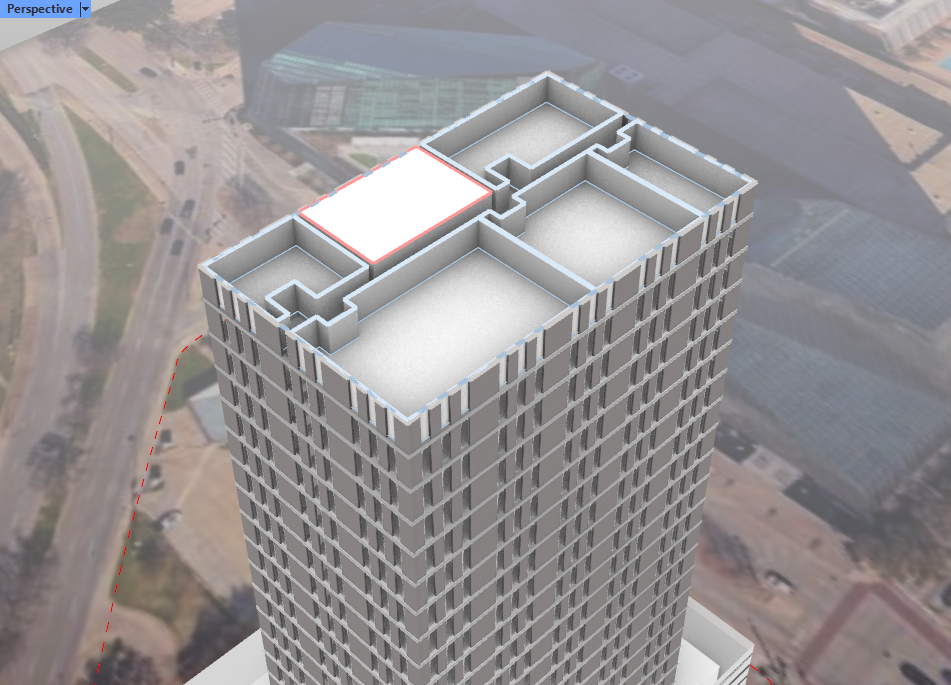
With the tower cut in section, the individual unit volumes are visible within the plate — each unit generated directly from the confirmed matrix, sized, oriented, and assigned to its face based on type, with the core and corridor geometry carved out to reflect real net areas.
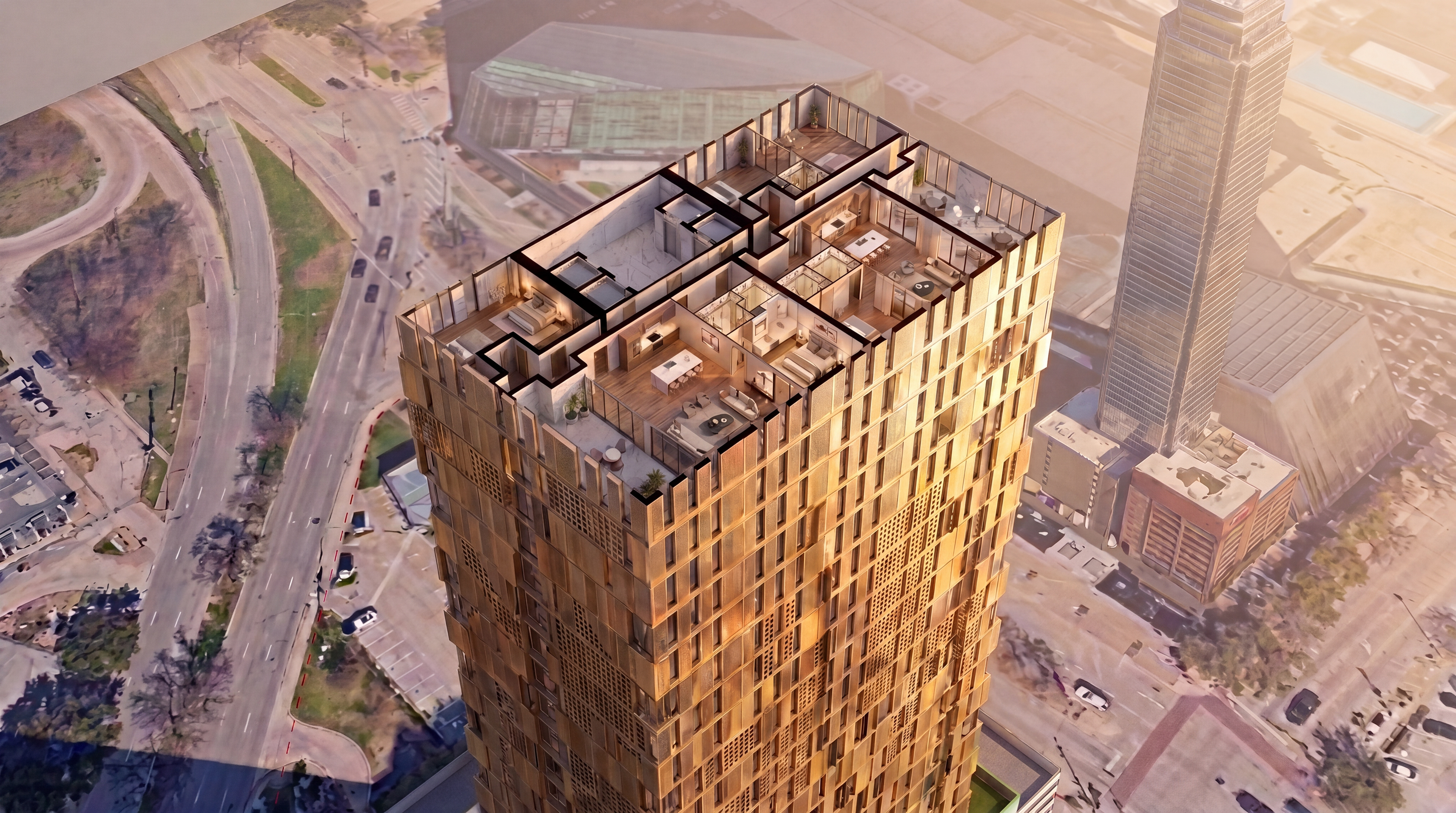
From the same AI-generated geometry, NanoBanana produces marketing-quality renders capable of supporting client presentations, project pursuits, and early-stage developer conversations — all before a single construction document exists.