

NEO Flatiron
New York City, New York
40.4428°, 73.5923°
AI Vision: 001
Programs: Rhino, Blender, Google API, Midjourney
Typology: Mixed-Use Cultural
Conceptualization
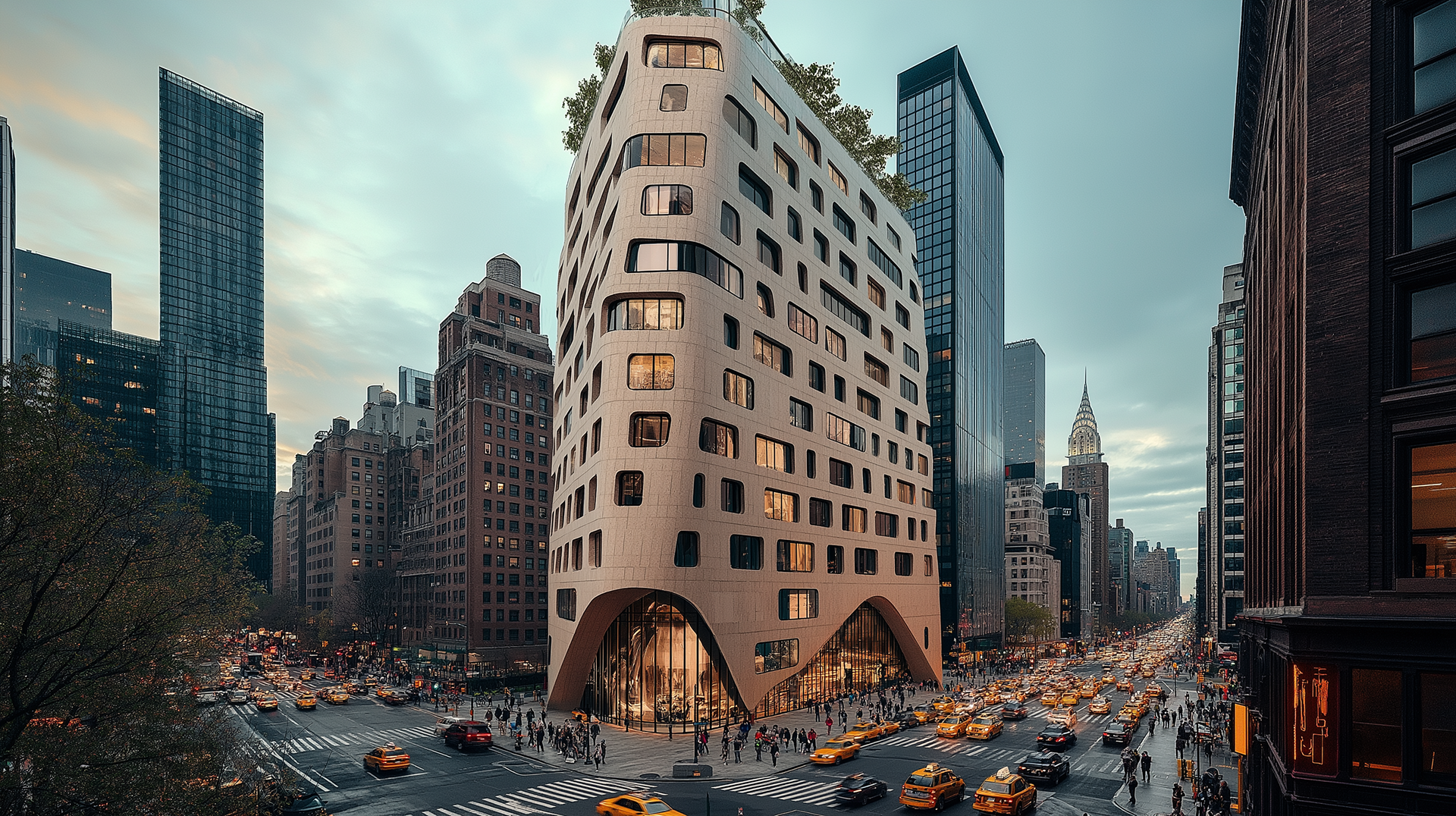
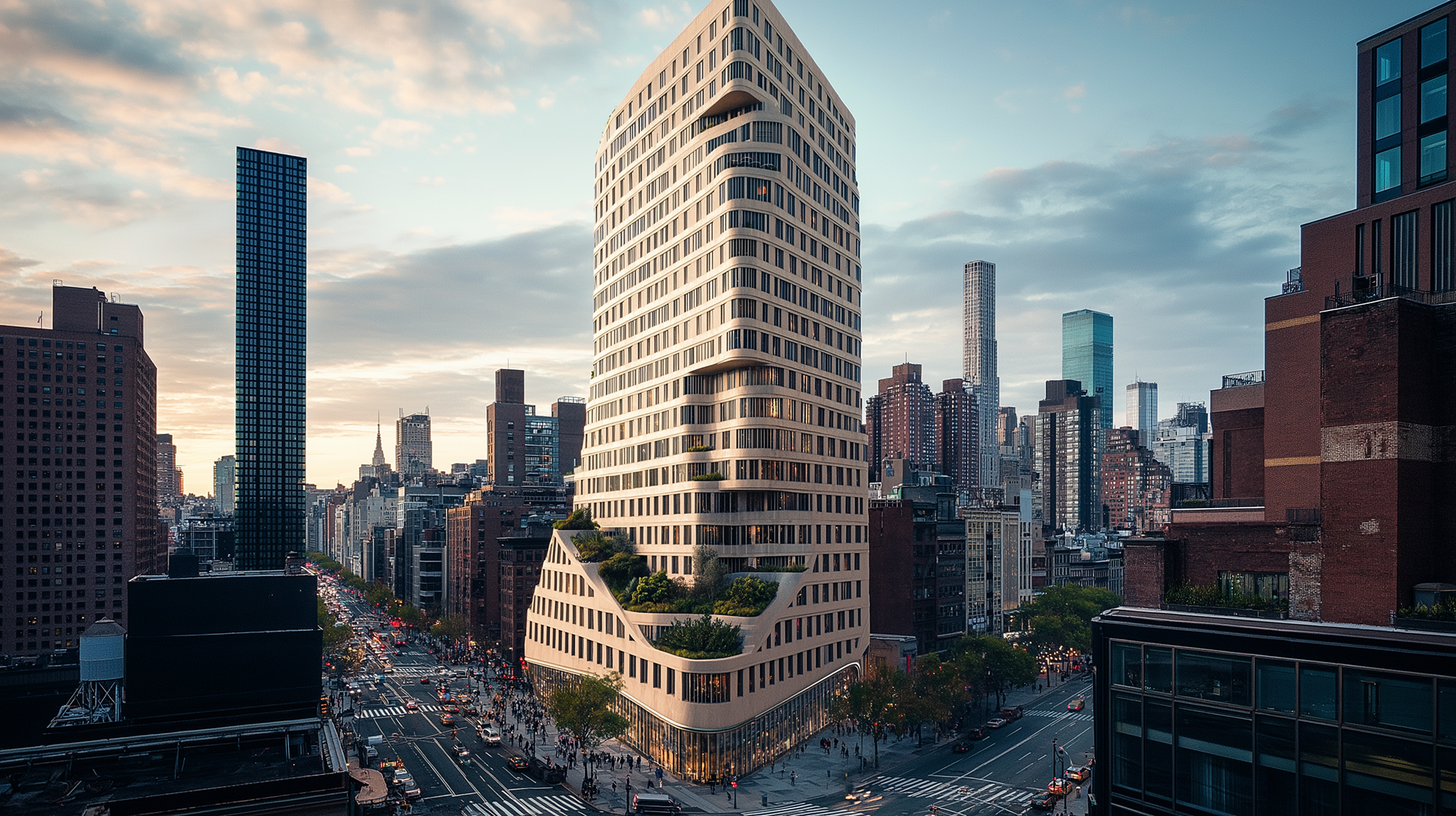
This AI-driven vision explores a contemporary reinterpretation of New York City’s iconic Flatiron Building—imagining its evolution rather than its replacement. The proposal embraces the original triangular footprint while translating its geometry into a softer, more sculptural form. Rounded corners, layered overhangs, and continuous glazing reinterpret the Flatiron’s sharp edge into a fluid, aerodynamic profile that feels grown rather than built.
Using AI-generative tools paired with a reverse-engineering workflow, speculative “hallucinations” are extracted, rationalized, and transformed into architectural logic. The result is a façade that blends organic curvature with modular repetition, incorporating vegetated terraces and softened vertical lines to introduce biophilic presence into a dense urban core. Timber-accented frames, ribbon-like bands, and planted balconies contribute to a sense of living architecture—one that breathes, adapts, and welcomes.
In this vision, the Flatiron becomes a symbol of renewal: a reawakening of a city defined by constant reinvention. The design proposes a future where history is not erased, but evolved—where New York’s architectural heritage is carried forward through material warmth, ecological integration, and a fresh embrace of contemporary urban life.

Prompting Process
AI-generated imagery for this project emerges through a layered prompting workflow that blends architectural references, abstract form language, and atmospheric world-building. Rather than relying on spontaneous output, prompts are structured to guide the model toward material specificity, spatial identity, and experiential richness—allowing the AI to speculate beyond what is known while remaining grounded in architectural logic.
Each image becomes a negotiation between precedent and imagination, where selected references seed tectonic ideas, descriptive cues establish tone, and narrative suggestion shapes how space is inhabited. The result is not random generation, but iterative evolution—visions built from suggestion rather than instruction, allowing AI to become a collaborator rather than a renderer.






Selection Process
The visual exploration was driven by iterative prompting through Midjourney, where each prompt produced four distinct variations, allowing rapid divergence and refinement of ideas. Within the span of one hour, 76 total outputs were generated—demonstrating both the speed and expansive imaginative range made possible through machine-assisted creativity.
From this collection, a curated set of “foundation” images was identified. These became the primary reference pool through which materiality, geometry, façade rhythm, and atmospheric qualities could be extracted. Successful elements across multiple generations were analyzed, isolated, and recombined, forming a basis for translation into realistic architectural constraints.
The process transforms AI hallucinations into architectural intention—leveraging volume, repetition, and variation to converge on a final, grounded vision suitable for real-world implementation.

